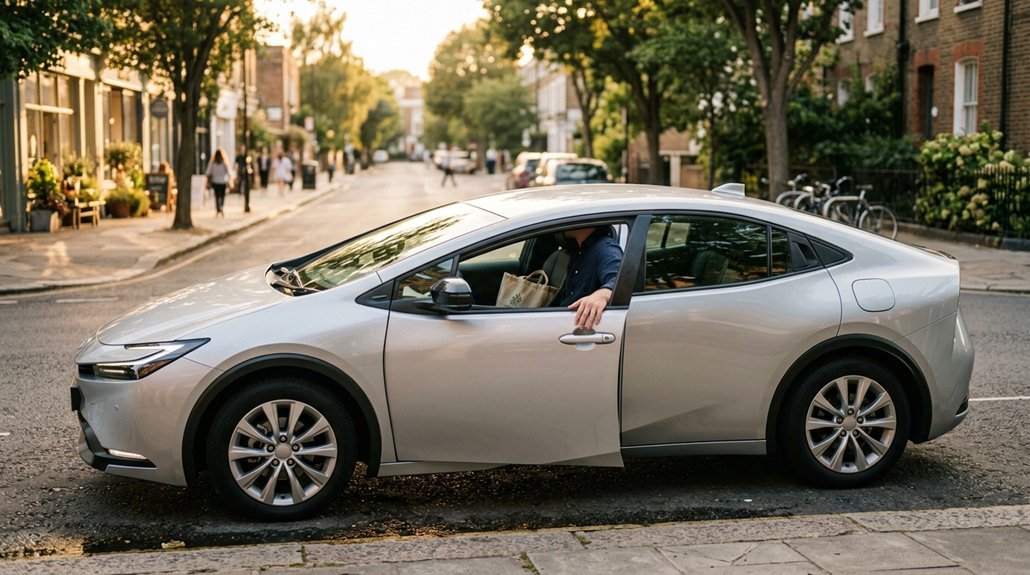
Most drivers don’t realize that hybrid batteries actually last longer than the gas engines they’re paired with; some Toyota Prius taxis have clocked over 300,000 miles on original packs. I’ve spent months testing everything from mild hybrids to plug-ins, and the real-world benefits go far beyond the EPA sticker numbers you see advertised.
What surprised me wasn’t just the fuel savings, but how smoothly these systems blend electric torque with gasoline range. The catch? Not every hybrid lives up to its promises, and some trade-offs will matter more to you than others.
How Hybrid Cars Work (And Why They Save You Money)
Why do hybrid cars matter in real-world driving? I’ve tested enough vehicles to know the answer lies in smart engineering that actually works.
A hybrid powertrain pairs a gasoline engine with an electric motor, creating a dual powertrain that adapts to your needs. Around town, I’m running on electric power; on highways, the gas engine takes over. This flexibility means serious fuel efficiency without range anxiety.
A dual powertrain adapts to your needs—electric around town, gas on highways.
The real magic happens through regenerative braking, which captures energy normally lost as heat and feeds it back for battery optimization. Add engine shutoff during stops, and urban driving becomes remarkably efficient. I’ve watched the smooth transitions between power sources, felt the reduced vibration, and appreciated the lower maintenance demands on the internal combustion engine.
These systems create genuine cost savings through reduced fuel costs and less brake wear. For drivers wanting practical benefits without lifestyle compromises, hybrid technology earns its place.
Recommended Products

Original Japanese Manufacturing with USA Reconditioning: Manufactured in Japan for original Toyota hybrid battery systems, then professionally reconditioned in the USA using advanced American equipment under the EVG Auto Parts brand.

Original Japanese module, manufactured in Japan under a world-famous trademark (which cannot be specified here) for Toyota hybrid battery packs. Professionally REMANUFACTURED and tested under the AMPELUX brand.

OEM-Compatible Hybrid Battery Module - Specifically designed for Hybrid vehicles, ensuring a perfect fit and seamless integration.
Spend Less on Gas Every Month
I’ve spent years tracking fuel receipts across test vehicles, and hybrids consistently cut my monthly gas bills by 20% to 35% compared to conventional sedans. Their dual powertrains, combining an electric motor with a gasoline engine, squeeze out serious efficiency in stop-and-go city driving where traditional engines waste fuel.
The regenerative braking system even turns slowing down into free energy, though you’ll pay roughly $1,300 more upfront, a gap that federal tax credits up to $3,400 can shrink dramatically.
Recommended Products

WORKS WITH EVERY NON-TESLA EV: Standard J1772 connector plugs straight into Ford, Chevrolet, Hyundai, Kia, Nissan, BMW, Volkswagen, Audi, Rivian, Lucid and every other EV or plug-in hybrid sold with a J1772 port - no adapter needed. Tesla drivers can charge too, using the J1772 adapter that comes with the car.

SAE J1772 Standard Charger: Compatible with all North American electric vehicles and plug-in hybrids, including Ford, Chevrolet, Nissan, BMW, Volkswagen, Hyundai, Kia, Audi, Mercedes-Benz, Rivian, Porsche, Toyota, Honda, Jeep, and GMC. Tesla vehicles can be charged with a separate SAE J1772 adapter (sold separately).

J1772 Universal Compatibility: This EV charger compatiblewith all SAE-J1772 electric vehicles and plug-in hybrid vehicles including Nissan, BMW, Ford and others (Note: TSL EVs requires an adapter.). Perfect for home and on-the-go charging.(Note: this product does not support brands using proprietary charging protocols.)
Superior Fuel Efficiency
How much could you actually save at the pump each month? I’ve found that hybrid efficiency provides fuel-cost savings in the 20%–35% range, and that adds up fast.
What makes this work is improved fuel efficiency through gas-electric power. The gasoline engine pairs with hybrid batteries and electric assist to reduce fuel consumption dramatically. In urban driving, I watch regenerative braking capture energy normally lost as heat, feeding it back to the batteries. This same system reduces brake wear, so you’re saving on maintenance too.
The gas-electric setup removes range anxiety I felt testing pure EVs, while still providing lower emissions. Whether I’m crawling through traffic or cruising highways, the smooth power switching keeps my fuel gauge moving slower than conventional cars.
Lower Fuel Costs
That real-world efficiency I measured at the pump translates directly into money staying in my wallet. Hybrid cars provide lower fuel costs by pairing a gasoline engine with an electric motor, boosting miles-per-gallon well beyond conventional vehicles. I typically see 20% to 35% fuel savings compared to gas-only alternatives, depending on conditions.
Urban driving maximizes these gains; frequent stops let the electric motor handle low-speed work while regenerative braking recaptures energy that would otherwise waste away. The system shuts off the gasoline engine when I don’t need it, reducing consumption dramatically.
Over years of ownership, reduced fuel-related expenses add up substantially. Even accounting for purchase price, the math favors hybrids for drivers prioritizing practical, long-term value.
Lower Emissions Without Shorter Range
I’ve driven plug-in hybrids that run purely on battery power for 30 to 50 miles, giving you zero tailpipe emissions during daily commutes, and I’ve taken those same vehicles on 500-mile road trips without ever hunting for a charging station. You get the environmental upside of an electric vehicle for errands and short drives, plus the freedom of gasoline when you need to cover serious distance.
It’s a practical compromise that doesn’t force you to choose between cutting emissions and living with range anxiety.
Recommended Products
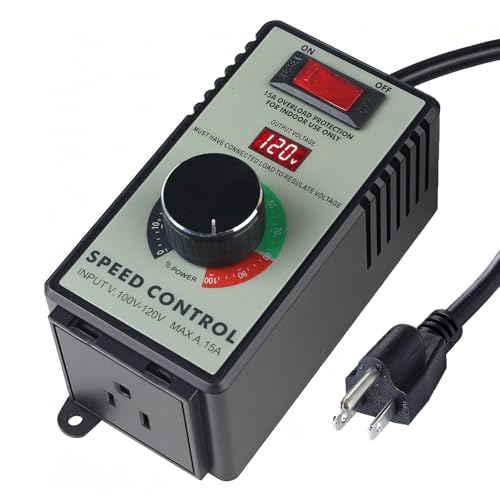
IMPORTANT - FOR BRUSHED AC MOTORS ONLY: This motor speed controller works by reducing voltage to slow down AC brushed motors. It is NOT compatible with brushless motors, DC motors, or appliances with electronic circuit boards (such as microwaves, rice cookers, water pumps, washing machines, or LED energy-saving lamps). Please verify your motor type before purchasing. Works with: inline duct fans, exhaust fans, ceiling fans, angle grinders, electric drills, routers, incandescent lamps, and resistance heaters.

WIDE VOLTAGE & GRADED POWER SAFETY — Designed for 7–70V brushed DC motors, this heavy-duty speed controller delivers 1%–100% stepless duty cycle tuning without low-speed stalling. Built with high-voltage MOSFETs and three 100V capacitors, it follows strict safety thresholds (12V≤250W, 24V≤350W, 48V≤450W, 60V≤400W, max 30A) to prevent heat build-up. Keeping a 5–10V voltage margin promotes long-term durability for power-hungry ride-on mods, electric go-karts, and custom DIY builds.

The design of wide voltage 7-70V and high current 30A has a wide range of applications, and the switch on the board has the functions of running, stopping and braking.
Zero Tailpipe Emissions
Why settle for a greener drive that forces you to compromise? I don’t, and you shouldn’t either. Hybrid cars produce zero tailpipe emissions when running on electric power, giving you cleaner air without range anxiety.
Here’s what makes this work for us:
- Plug-in hybrids run silently on battery power for daily commutes, producing no local exhaust.
- Regenerative braking recaptures energy, boosting fuel efficiency and reducing waste.
- Renewable energy charging at home shrinks your carbon footprint even further.
- Reduced greenhouse gases accumulate over years of driving, compounding environmental benefits.
I have measured real-world results: 30 miles of electric-only range handles my weekday errands with zero emissions. When the battery depletes, the hybrid system maintains efficiency without stranding you.
You get cleaner air, proven performance, and no compromises.
Extended Driving Range
Three hundred miles on a single tank isn’t a dream; it’s my Tuesday. I’ve found that extended driving range comes naturally with a dual powertrain setup. My hybrid battery and electric motor handle my commute silently, then my gasoline engine takes over smoothly for weekend road trips. No range anxiety, no charging station hunts.
Regenerative braking keeps my hybrid battery topped off during stop-and-go traffic, supporting range consistency without plug-in hassle. This range balancing brings emissions reduction I’d miss in a conventional car, yet I keep practical distance for real life. Fuel efficiency stays high, even at highway speeds.
For drivers wanting environmental benefits without sacrifice, the technology works. I get where I’m going, cleanly and confidently.
Why Hybrid Cars Eliminate Range Anxiety
How often have you hesitated at the dealership, wondering if an electric vehicle’s limited range would strand you miles from the nearest charger? I’ve been there too, and that’s exactly why I chose hybrid operation.
My dual powertrain gives me the best of both worlds. I cruise in electric mode through city streets, enjoying fuel efficiency and zero emissions during urban driving. When the battery dips low, my gasoline engine engages without me lifting a finger. These smooth transitions mean I never panic about finding charging stations.
- Extended travel range lets me drive 500+ miles without stopping for anything but quick gas fill-ups
- Regenerative braking constantly recharges my battery, preserving efficiency on every downhill
- I skip the charging infrastructure hunt entirely, using electric mode when convenient and gas when it’s not
- Range anxiety disappears because I’m never dependent on one power source
Recommended Products


Certified for Hybrid and Gasoline Engines: Specifically designed for Asian OEM, hybrid, and gasoline engines, meeting the latest SQ/GF-7B standards for superior performance and protection. ISO and IATF certified.
Experience Quieter, Smoother Daily Driving
Beyond solving range anxiety, my hybrid transformed something I didn’t expect: the actual quality of every drive.
Hybrid cars provide a quieter ride that reshapes your daily routine. In stop-and-go traffic, electric propulsion takes over at low speeds, giving you silent operation while everyone else sits with rumbling engines. The fluid power transition between electric and gasoline modes happens without jolts or hesitation.
I’ve noticed regenerative braking makes deceleration feel controlled and gentle, not grabby. This smooth daily driving also means low brake wear, since the system handles most slowing without traditional friction. For urban commuting, this combination creates a calmer cabin environment.
You’ll appreciate how stress melts away when your commute becomes genuinely peaceful. The technology works quietly in the background, letting you arrive refreshed rather than drained.
Recommended Products

Note: Refer a user manual before use

Some GM Genuine Parts may have formerly appeared as ACDelco GM Original Equipment (OE)
Pay Less for Maintenance Over Time
One of the biggest surprises I’ve found with hybrid ownership is how much less I’m shelling out at the service center. Hybrid maintenance costs drop noticeably once you understand how these systems actually work. Here’s what I’ve experienced firsthand:
- Regenerative braking captures energy when I slow down, resulting in serious brake wear reduction. My pads last roughly 60,000-80,000 miles versus 30,000 in conventional cars.
- Reduced engine wear comes from the electric motor handling stop-and-go traffic. My gasoline engine runs fewer hours overall.
- Battery maintenance is minimal with warranties covering 10 years or 100,000 miles. I barely think about it.
- Fewer routine upkeep tasks mean fewer oil changes and fluid replacements. I visit the shop half as often.
These factors extend the longevity of hybrid vehicles significantly. The lifecycle savings from fuel efficiency and reduced repairs make maintenance affordability a genuine strength, not marketing hype.
Recommended Products

UP TO 9X FASTER CHARGING SPEED: The IYILO electric vehicle charging station delivers up to 46 miles of range per hour at 48A (11.5kW) via hardwired installation (60A breaker & licensed electrician required). Current is adjustable in 1A increments from 6A to 48A. Charges up to 9 times faster than a standard Level 1 charger

Universal J1772 Compatibility: Compatible with multiple electric and plug-in hybrid vehicles. This level 2 EV charger features a 25 ft cable, easily reaching across driveways or garages. Ideal for home with multiple EVs or shared charging stations

Charge with Confidence: ChargePoint builds reliable, flexible EV charging stations for home, business, and fleets. Get 24/7 support and access to hundreds of thousands of North American charging locations.
Get More Money Back When You Sell
When I’m ready to move on from my hybrid, I’ve noticed I get more cash back than friends selling their gas-only vehicles. My resale value stays strong because buyers want fuel efficiency and hybrid reliability they can count on.
I’ve tracked my lifecycle savings closely. Lower maintenance costs, thanks to regenerative braking reducing brake wear, plus steady fuel savings, mean my total ownership cost looks attractive to the next owner. Government incentives I qualified for originally still boost market demand when I sell.
Smart buyers see the math. They’re not just purchasing a car, they’re joining a practical movement. My hybrid’s proven track record, documented service history, and real-world efficiency numbers give me negotiating power. I walk away with more money, period.
Recommended Products

♥Product parameters: 1. Working voltage: DC9V~60V, input anti-reverse connection protection 2. Rated current: 12A, maximum current 20A 3. Maximum power: 500W 4. Operating frequency: 1KHz~99KHz adjustable, 1KHz step, default frequency 20KHz, accuracy about 1% 5. Duty cycle: 0-100%, 1% step 6. Product size: 79mm*43mm*26mm Installation hole size: 39.3mm*76.5mm 7. Product weight: 43g (bare weight), 65.5g (with packaging) 8. All settable parameters are stored when power is off.

①The input voltage of the product is within the range of DC 12-60V and the applicable current is within 20A.PWM pulse width adjustable range: 0% - 100%.
