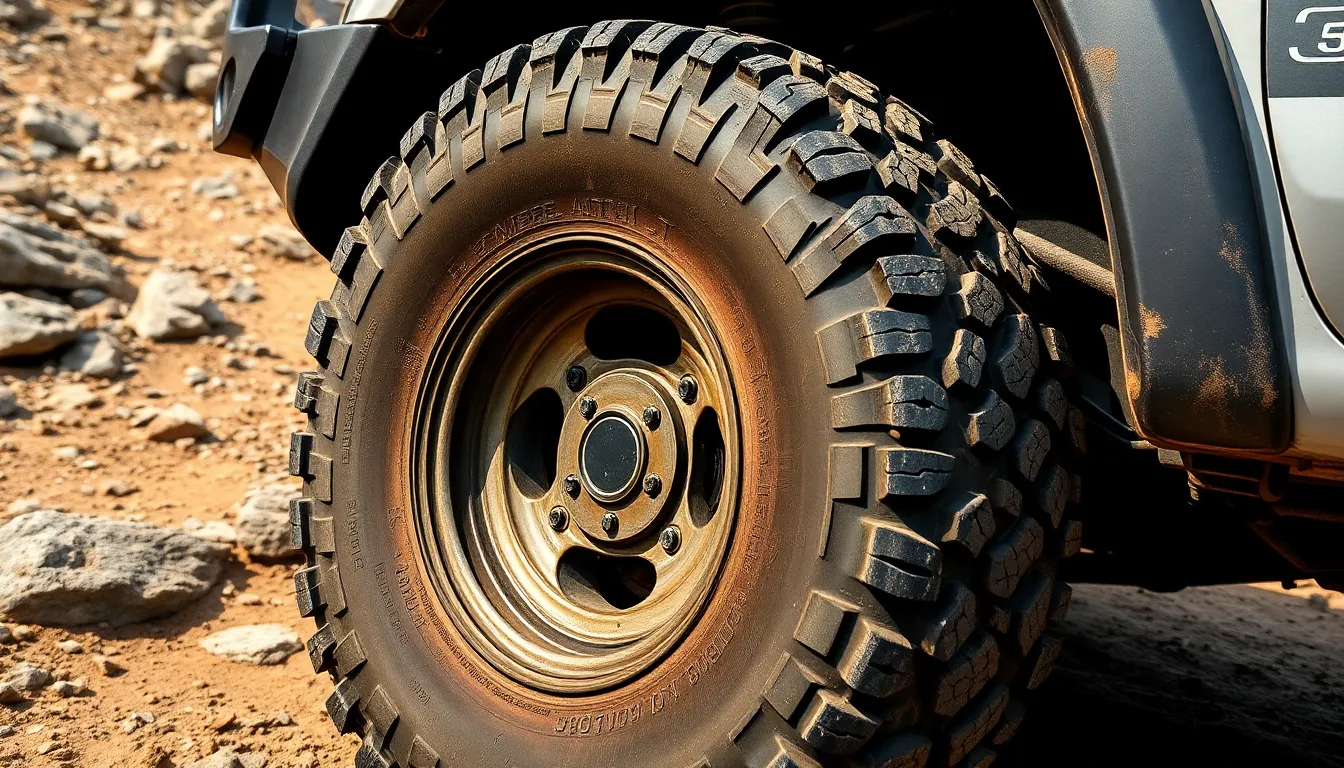
Wondering what 285 75 R17 actually means in inches? This tire size code might look like a random string of numbers, but it contains critical information about your vehicle’s performance and fitment compatibility.
When you’re shopping for new tires or trying to understand your current setup, converting tire measurements from metric to inches becomes essential. The “285” represents the tire width in millimeters, “75” indicates the aspect ratio, and “17” specifies the wheel diameter in inches. By translating these numbers properly, you’ll ensure you get the right tire size for your truck, SUV, or off-road vehicle.
Understanding 285/75R17 Tire Measurements
Tire size codes like 285/75R17 contain essential information about the tire’s dimensions and construction. Understanding these measurements helps you select the right tires for your vehicle and ensure optimal performance on and off the road.
Breaking Down the 285/75R17 Tire Code
The 285/75R17 tire code consists of three primary numeric components, each representing a exact dimension. “285” indicates the tire’s width in millimeters, measured from sidewall to sidewall. This substantial width of 285mm offers excellent traction and stability, particularly beneficial for trucks and SUVs. The middle number “75” represents the aspect ratio, showing that the tire’s height is 75% of its width. A higher aspect ratio like this provides better ride comfort and increased ground clearance. The “R” designates a radial construction, the most common tire type with steel belts running at 90-degree angles beneath the tread. Finally, “17” specifies the wheel diameter in inches, indicating the tire fits 17-inch wheels.
Converting 285/75R17 to Inches
Converting 285/75R17 measurements from metric to imperial units clarifies the tire’s actual dimensions. The width of 285mm equals approximately 11.22 inches. To calculate the sidewall height, multiply the width by the aspect ratio percentage (11.22 × 0.75 = 8.42 inches). The total tire diameter combines the sidewall height (doubled for both sides) plus the wheel diameter: (8.42 × 2) + 17 = 33.84 inches. This makes a 285/75R17 tire nearly 34 inches in diameter, explaining why it’s popular among off-road enthusiasts and owners of lifted trucks. The generous sidewall provides cushioning over rough terrain, while the substantial overall diameter offers improved ground clearance for handling obstacles.
The Actual Dimensions of a 285/75R17 Tire
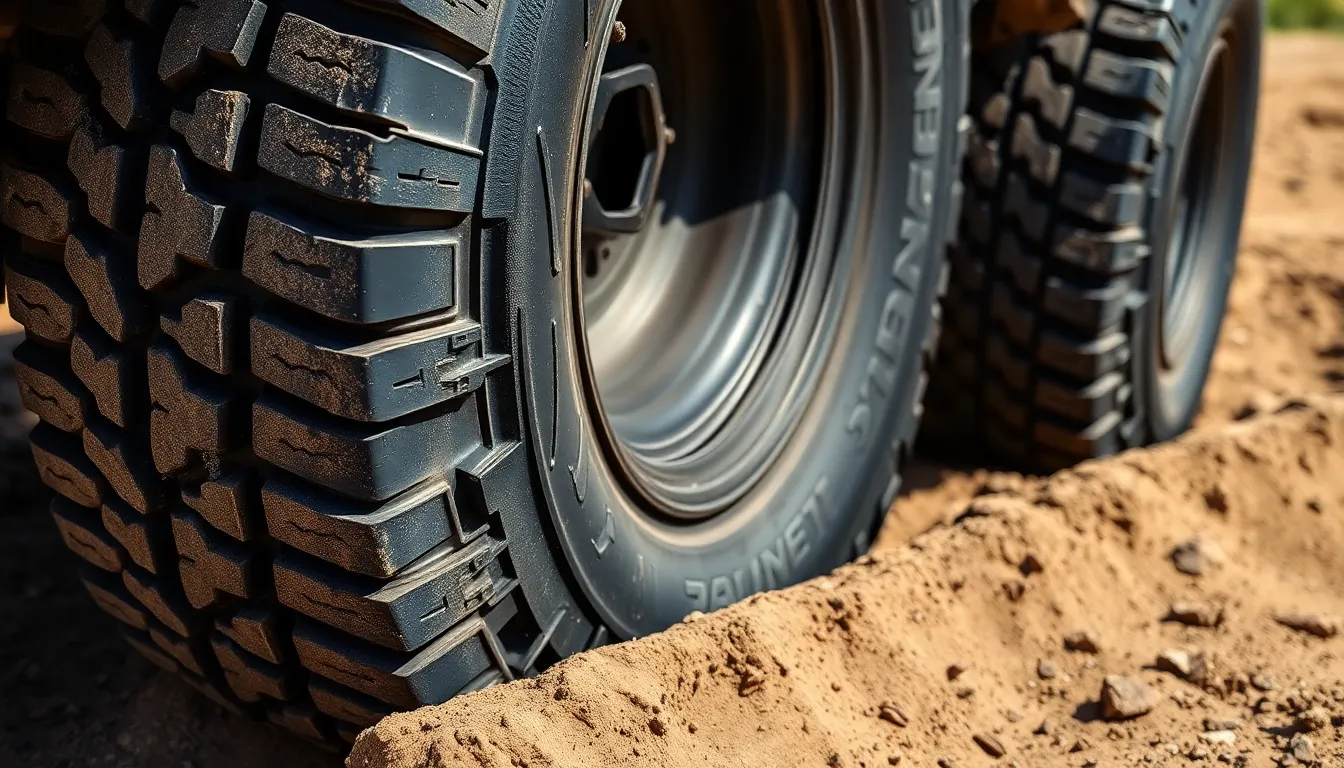
A 285/75R17 tire’s dimensions can be precisely measured in both inches and millimeters, providing clarity for vehicle owners seeking the right fit. These measurements are crucial for proper vehicle performance, ground clearance, and overall driving experience.
Overall Diameter in Inches
The overall diameter of a 285/75R17 tire measures approximately 33.8 to 33.9 inches, depending on the exact manufacturer and model. This substantial size contributes to excellent ground clearance, making these tires particularly well-suited for off-road vehicles and lifted trucks. The impressive diameter provides about 106.2 to 106.4 inches in circumference, resulting in approximately 595-596 revolutions per mile during normal driving conditions.
Section Width in Inches
The section width of a 285/75R17 tire equals 11.2 inches (285 millimeters), creating a broad footprint on the road or trail. This generous width delivers enhanced stability and traction, especially valuable for trucks and SUVs carrying heavy loads or traversing challenging terrain. Most 285/75R17 tires are designed to fit on rims ranging from 7.5 to 9.5 inches in width, offering flexibility for different wheel setups while maintaining optimal performance characteristics.
Sidewall Height in Inches
The sidewall height measures approximately 8.4 inches, calculated as 75% of the 11.2-inch width (0.75 × 11.2 = 8.4). This substantial sidewall profile provides excellent cushioning against road imperfections and offers additional protection for your wheels when driving over rocks, ruts, and other obstacles. Taller sidewalls also contribute to improved ride comfort on rough surfaces and allow for greater air volume within the tire, improving load-carrying capacity and heat dissipation during extended driving sessions.
Benefits of 285/75R17 Tires
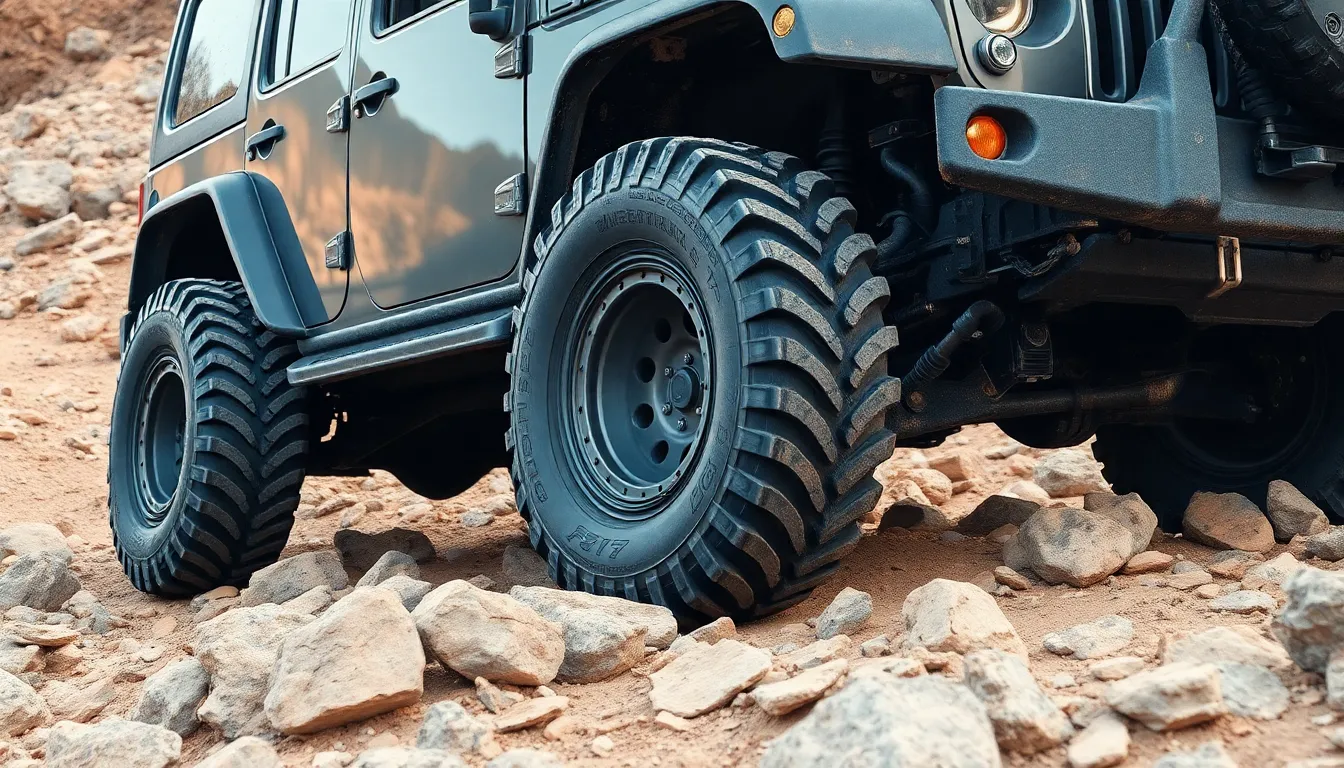
285/75R17 tires offer important advantages for both off-road enthusiasts and everyday drivers. These 34-inch tall, 11.2-inch wide tires provide an excellent balance of performance across various terrains while maintaining reasonable on-road manners.
Off-Road Performance Advantages
The larger 33.8-33.9 inch diameter of 285/75R17 tires dramatically increases ground clearance, allowing your vehicle to navigate over obstacles with greater ease. Their 11.2-inch width creates a broader footprint that enhances traction on challenging surfaces like mud, rocks, and loose dirt. The generous 8.4-inch sidewall height enables these tires to flex effectively over uneven terrain, absorbing impacts from rocks and ruts while maintaining contact with the ground. Off-road enthusiasts particularly value the ability to run these tires at lower pressures when tackling difficult trails, as the increased sidewall flexibility conforms better to obstacles. Trucks and SUVs equipped with these tires benefit from improved durability and puncture resistance compared to smaller tire options.
On-Road Handling Characteristics
Even though their off-road prowess, 285/75R17 tires maintain respectable on-road performance thanks to their radial construction. The wider 11.2-inch tread provides enhanced stability during cornering and more confident handling in adverse weather conditions. Their larger contact patch distributes vehicle weight more effectively, potentially improving braking performance on paved surfaces. But, these benefits come with practical considerations—the increased size and weight can reduce fuel economy by several percentage points compared to stock tires. Speedometer accuracy decreases by approximately 6.6% when upgrading from smaller sizes like 265/70R17, making recalibration necessary for precise speed readings. The tire’s circumference of roughly 106.3 inches means it completes about 595 revolutions per mile, affecting both gearing and overall driving dynamics.
Common Vehicles That Use 285/75R17 Tires
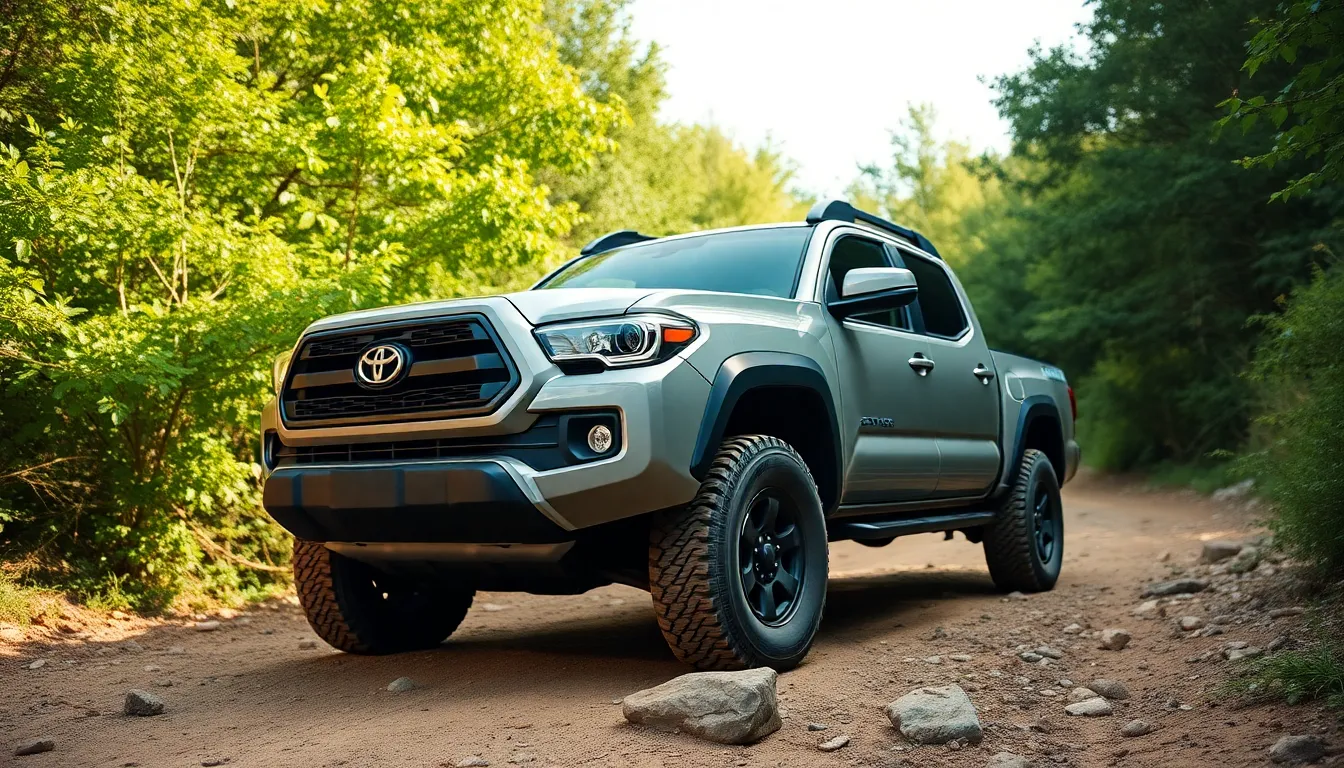
The 285/75R17 tire size is particularly popular among several truck and SUV models known for their off-road capabilities and rugged performance. Toyota vehicles like the Tacoma and 4Runner frequently use this tire size, especially in their off-road oriented trims. Ford F-150 owners often upgrade to these tires when seeking improved ground clearance and off-road traction.
Chevrolet Silverado trucks, particularly those equipped with off-road packages, come standard with or are commonly upgraded to 285/75R17 tires. Jeep Wrangler enthusiasts favor this tire size for its ideal balance of on-road manners and off-road capability. The 11.2-inch width and 33.8-inch overall diameter make these tires perfect for vehicles requiring robust all-terrain performance.
These tires are specifically chosen for trucks and SUVs because they provide increased sidewall height (8.4 inches) for better shock absorption when traversing rough terrain. Their wide tread pattern creates improved traction in mud, snow, and loose surfaces. Many off-road vehicle owners appreciate how these tires complement lifted suspension systems while maintaining reasonable highway performance.
The 285/75R17 size represents an excellent middle ground for vehicles that see both daily driving and weekend adventures. Heavy-duty trucks benefit from the improved load capacity and durability these wider tires offer. Off-road specialized vehicles gain enhanced performance from the larger contact patch and ability to run at lower pressures when handling obstacles.
Comparing 285/75R17 to Similar Tire Sizes
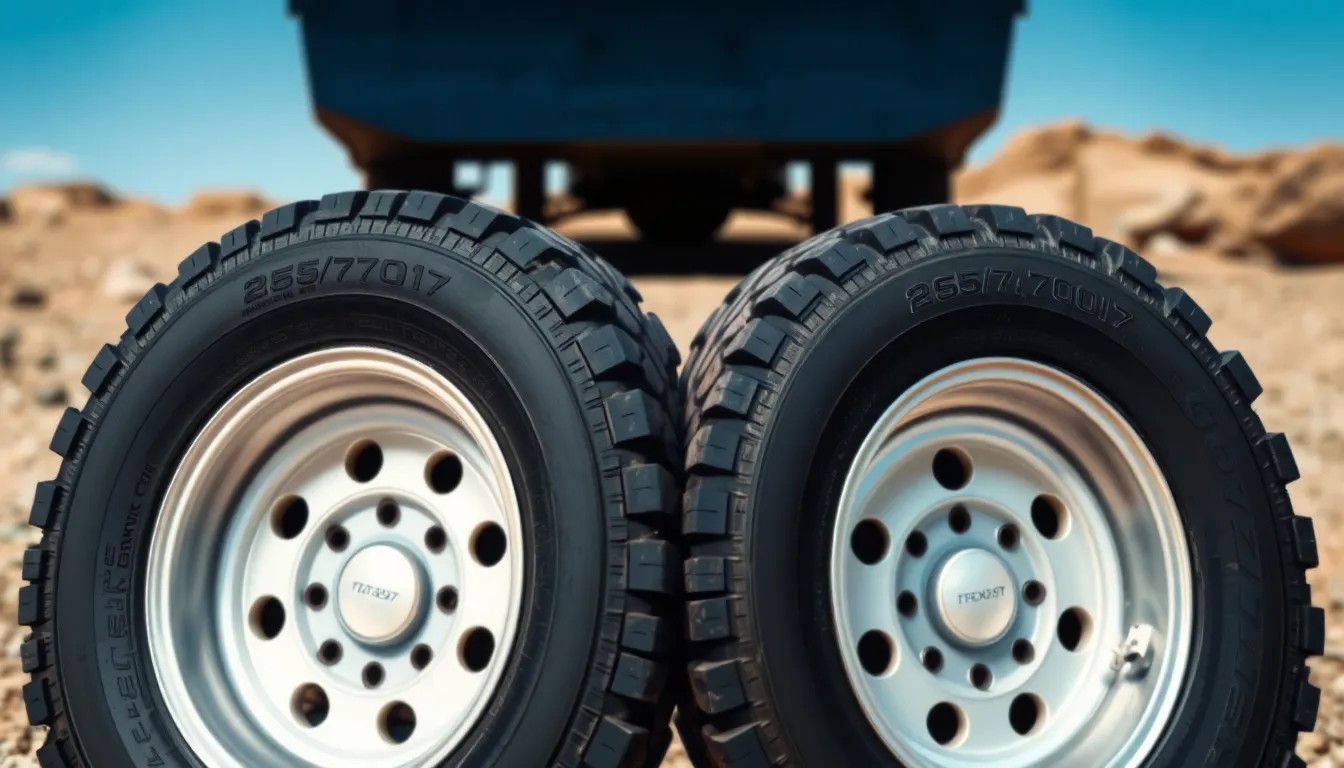
Understanding how 285/75R17 tires compare to other common sizes helps you make informed decisions when upgrading or replacing your truck or SUV tires. The dimensional differences between tire sizes significantly impact performance, clearance, and overall driving experience.
Differences From 265/70R17
The 285/75R17 tire is substantially larger than the 265/70R17 in several key dimensions. Diameter-wise, the 285/75R17 measures approximately 33.8 inches compared to the 265/70R17’s 31.6 inches—a difference of 2.22 inches. This size differential creates a noticeable increase in ground clearance for your vehicle. Width measurements show the 285/75R17 is 11.2 inches across, making it 0.79 inches wider than the 265/70R17’s 10.43-inch width, resulting in an expanded contact patch for improved traction. The 285/75R17 features a taller sidewall at 8.4 inches versus the 265/70R17’s 7.3 inches, offering enhanced impact absorption on rough terrain. Circumference measurements reveal the 285/75R17 has a 106.3-inch circumference, approximately 7 inches greater than its smaller counterpart. This larger circumference translates to about 42 fewer revolutions per mile, causing a speedometer discrepancy of roughly 6.6% unless recalibrated.
Differences From 295/70R17
The 285/75R17 and 295/70R17 represent different approaches to large-tire performance. Width is the most obvious distinction, with the 295/70R17 measuring approximately 11.6 inches across—0.4 inches wider than the 285/75R17’s 11.2-inch width. This extra width gives the 295/70R17 a slightly larger footprint for maximized traction in certain conditions. Sidewall proportions differ significantly between these sizes; the 285/75R17 has a taller sidewall (8.4 inches) compared to the 295/70R17’s estimated 7.7-8.1 inches due to its lower aspect ratio of 70%. Total diameter measurements remain relatively similar between both sizes, with the 285/75R17 at 33.8-33.9 inches and the 295/70R17 typically measuring between 33-34 inches depending on the manufacturer. The taller sidewall of the 285/75R17 typically provides better cushioning and flex for off-road applications, while the wider 295/70R17 might offer marginally better stability during cornering on paved surfaces. These dimensional differences create distinct performance characteristics that cater to different driving priorities and terrain types.
Conclusion
Understanding the dimensions of 285/75R17 tires gives you valuable knowledge for making informed vehicle choices. At approximately 11.22 inches wide with 8.42-inch sidewalls and a total diameter of nearly 34 inches these tires deliver exceptional ground clearance and off-road capability.
They’re ideal for trucks and SUVs like the Toyota Tacoma Ford F-150 and Jeep Wrangler balancing daily drivability with adventure-ready performance. While they offer superior traction cushioning and obstacle clearance they may impact fuel economy and speedometer readings.
When comparing tire options remember that these dimensions significantly affect your driving experience both on and off-road. The right tire choice ensures your vehicle performs at its best regardless of where your journeys take you.
Frequently Asked Questions
What does the tire size 285/75R17 mean?
The tire size 285/75R17 breaks down into three main components: “285” represents the width in millimeters (11.22 inches), “75” indicates the aspect ratio (sidewall height is 75% of the width), and “17” specifies the wheel diameter in inches. The “R” stands for radial construction, the most common tire type today.
How tall is a 285/75R17 tire?
A 285/75R17 tire has an overall diameter of approximately 33.8-33.9 inches. This measurement includes both the wheel diameter and the tire’s sidewall height on both sides. This larger diameter provides excellent ground clearance, making these tires ideal for off-road use and lifted trucks.
How wide is a 285/75R17 tire?
The 285/75R17 tire has a section width of about 11.2 inches (converted from 285mm). This width provides enhanced stability and traction, especially beneficial for vehicles carrying heavy loads or traveling over challenging terrain.
What is the sidewall height of a 285/75R17 tire?
The sidewall height is approximately 8.4 inches. This measurement comes from taking 75% of the tire width (285mm). The generous sidewall offers better cushioning against road imperfections and improves ride comfort on rough surfaces.
Which vehicles commonly use 285/75R17 tires?
This tire size is popular on trucks and SUVs with off-road capabilities, including Toyota Tacoma and 4Runner, Ford F-150, Chevrolet Silverado, and Jeep Wrangler—particularly in their off-road trims. These vehicles benefit from the increased ground clearance and traction provided by these tires.
How does a 285/75R17 compare to a 265/70R17 tire?
The 285/75R17 is larger than the 265/70R17 in all dimensions. It offers approximately 1.3 inches more in overall diameter, 0.8 inches more in width, and has a taller sidewall. This provides better ground clearance, enhanced traction, and improved impact absorption for off-road driving.
Will 285/75R17 tires affect my fuel economy?
Yes, these larger, heavier tires typically reduce fuel economy compared to smaller stock tires. The increased weight requires more energy to rotate, and the wider profile creates more rolling resistance and aerodynamic drag. Expect a slight decrease in MPG after upgrading to this size.
Do I need to recalibrate my speedometer with 285/75R17 tires?
If you’re upgrading from smaller stock tires, you should recalibrate your speedometer. The larger diameter causes your vehicle to travel more distance per rotation, making your speedometer read slower than your actual speed. This can affect navigation accuracy and potentially lead to speeding tickets.
Are 285/75R17 tires good for off-roading?
These tires excel in off-road conditions. Their larger diameter increases ground clearance for navigating obstacles, while the wider footprint enhances traction on challenging surfaces. The flexible sidewall absorbs impacts effectively, and they can be run at lower pressures for better conformity to obstacles.
Can I put 285/75R17 tires on my stock wheels?
It depends on your vehicle’s specifications. While these tires can fit on 17-inch wheels, you need to ensure the wheel width is appropriate (typically 7.5-9 inches). Additionally, check for adequate clearance in wheel wells to prevent rubbing against suspension components or body parts during turns or compression.