Wondering what exactly “285 60 R20” means in inches? This tire size notation might seem like a confusing jumble of numbers, but understanding these measurements is crucial when you’re shopping for replacement tires or upgrading your vehicle’s wheels.
When you break down the 285 60 R20 tire size, you’re looking at exact dimensions that determine how your vehicle performs on the road. The “285” represents the tire width in millimeters, “60” indicates the aspect ratio (height to width percentage), and “R20” means it’s a radial tire with a 20-inch diameter wheel. Converting these measurements to inches gives you a clearer picture of the tire’s actual size and helps ensure you’re making the right choice for your vehicle.
Understanding Tire Size Notation: What Is 285/60R20?
Tire size notations like 285/60R20 follow a standardized format that contains crucial information about your tire’s dimensions. The numbers and letters in this sequence represent exact measurements that determine how your tire fits and performs on your vehicle.
The first number “285” indicates the tire’s width in millimeters measured from sidewall to sidewall. At 285mm (approximately 11.2 inches), this is considered a fairly wide tire often found on trucks and SUVs.
Following the width, the number “60” represents the aspect ratio, which is the tire’s sidewall height as a percentage of its width. In this case, the sidewall height equals 60% of the 285mm width, calculating to 171mm (about 6.7 inches).
The letter “R” stands for Radial construction, the most common tire construction method today. Radial tires have layers of cord material running radially (at 90-degree angles) from bead to bead.
Finally, “20” indicates the wheel diameter in inches that this tire is designed to fit. This measurement represents the distance from one end of the wheel to the other, passing through the center.
Understanding these components helps you make informed decisions when replacing tires. Liam Kohn, our resident tire expert, encountered many customers confused by these numbers until he explained how each element affects their driving experience and vehicle performance.
Converting 285/60R20 to Inches: The Complete Breakdown
Converting the 285/60R20 tire size to inches helps you understand exactly what you’re getting when purchasing new tires. This breakdown translates each component of this metric tire size into standard inch measurements for easier comprehension.
Calculating the Tire Width in Inches
The width of a 285/60R20 tire measures exactly 285 millimeters from sidewall to sidewall. Converting this measurement to inches requires dividing by 25.4 (the number of millimeters in an inch):
| Calculation | Result |
|---|---|
| 285 ÷ 25.4 | 11.22 inches |
Your tire’s width equals 11.22 inches, which provides substantial road contact – a feature Liam Kohn often points out gives trucks and SUVs better stability during cornering and braking.
Determining the Sidewall Height in Inches
The sidewall height corresponds to the “60” in the tire size, representing the aspect ratio as a percentage of the width. Calculate this measurement by multiplying the width in inches by 0.60:
| Calculation | Result |
|---|---|
| 11.22 × 0.60 | 6.73 inches |
Each sidewall measures approximately 6.73 inches in height. This moderate profile offers a good balance between comfort and handling, something Liam frequently demonstrates to customers by comparing different aspect ratios side by side.
Finding the Total Diameter in Inches
The total diameter combines the wheel size plus twice the sidewall height (since sidewalls appear on both top and bottom). For a 285/60R20 tire, add twice the sidewall height to the 20-inch wheel diameter:
| Measurement | Inches |
|---|---|
| Wheel Diameter | 20.00 |
| Two Sidewalls (6.73 × 2) | 13.46 |
| Total Diameter | 33.46 |
Your complete tire diameter measures 33.46 inches. This larger diameter increases ground clearance and affects speedometer readings – a fact Liam highlights when customers upgrade from stock tire sizes. The dimensional properties of this tire size make it particularly suitable for full-size trucks and larger SUVs that need the combination of width for stability and sidewall height for comfort.
Real-World Dimensions of a 285/60R20 Tire
The 285/60R20 tire size translates to exact physical measurements that affect vehicle performance and handling. These dimensions provide critical information for vehicle owners looking to understand their tire specifications in standard inches rather than the metric designations.
Overall Diameter and Circumference
A 285/60R20 tire has an overall diameter of approximately 33.46 to 33.5 inches (850 mm). This measurement represents the total height of the tire from road surface to top when mounted on a wheel. The circumference of this tire size measures about 105.1 to 105.2 inches (2669-2670 mm), representing the complete distance around the tire’s outer edge. Each 285/60R20 tire makes around 602 to 603 revolutions to cover one mile of distance, an important factor for calculating speed and distance traveled. These larger-diameter tires are typically installed on trucks and SUVs, providing improved ground clearance and a commanding presence on the road.
Impact on Speedometer Accuracy
The 285/60R20 tire’s larger dimensions directly affect your vehicle’s speedometer readings. Compared to smaller sizes like the 275/55R20, this tire has an overall diameter approximately 1.56 inches larger, causing your speedometer to display a reading approximately 4.6% lower than your actual speed. For example, when your speedometer shows 60 mph, you’re actually traveling at about 62.8 mph. Tire expert Liam Kohn frequently reminds customers about this critical detail, noting that “Many drivers don’t realize how tire size changes affect their speedometer until they’re surprised by a speeding ticket.” The increased diameter means your vehicle covers more ground with each tire revolution than what the factory-calibrated speedometer accounts for. This discrepancy requires awareness when monitoring your speed, especially in speed-restricted zones where accuracy matters for safety and legal compliance.
Comparing 285/60R20 to Other Common Tire Sizes
The 285/60R20 tire size differs significantly from other popular tire dimensions, affecting performance, handling, and fitment on your vehicle. Comparing these differences helps you make informed decisions when upgrading or replacing your tires.
Size Differences from Factory Original Tires
Upgrading to 285/60R20 tires creates measurable changes in your vehicle’s performance and appearance. Compared to a 275/55R20 tire, the 285/60R20 stands approximately 1.56 inches taller in overall diameter and causes about 4.6% speedometer difference. Your speedometer will read slower than your actual speed with this larger tire installed. The difference becomes even more apparent when comparing to a 265/60R20 tire, where the 285/60R20 is about 0.94 inch taller with a resulting 2.8% speedometer difference.
Tire expert Liam Kohn regularly reminds customers, “Many drivers don’t realize that going up just one tire size can dramatically change how their vehicle feels on the road. The extra inch of height you get with a 285/60R20 might not sound like much on paper, but it transforms ground clearance and stance completely.”
Clearance Considerations for Your Vehicle
Installing 285/60R20 tires requires careful evaluation of your vehicle’s available space. The increased width (11.2 inches) and taller profile (33.4 inches overall diameter) can create rubbing issues against suspension components or fenders, particularly during turns or when carrying heavy loads. Your vehicle’s wheel wells must accommodate this larger footprint without interference.
The dimensional increases affect more than just physical clearance. Your vehicle’s handling characteristics change with larger tires – expect slightly different steering response and potentially altered fuel economy due to the modified gear ratios. Acceleration may decrease slightly as the engine works to rotate the larger, heavier tires.
Benefits and Drawbacks of 285/60R20 Tires
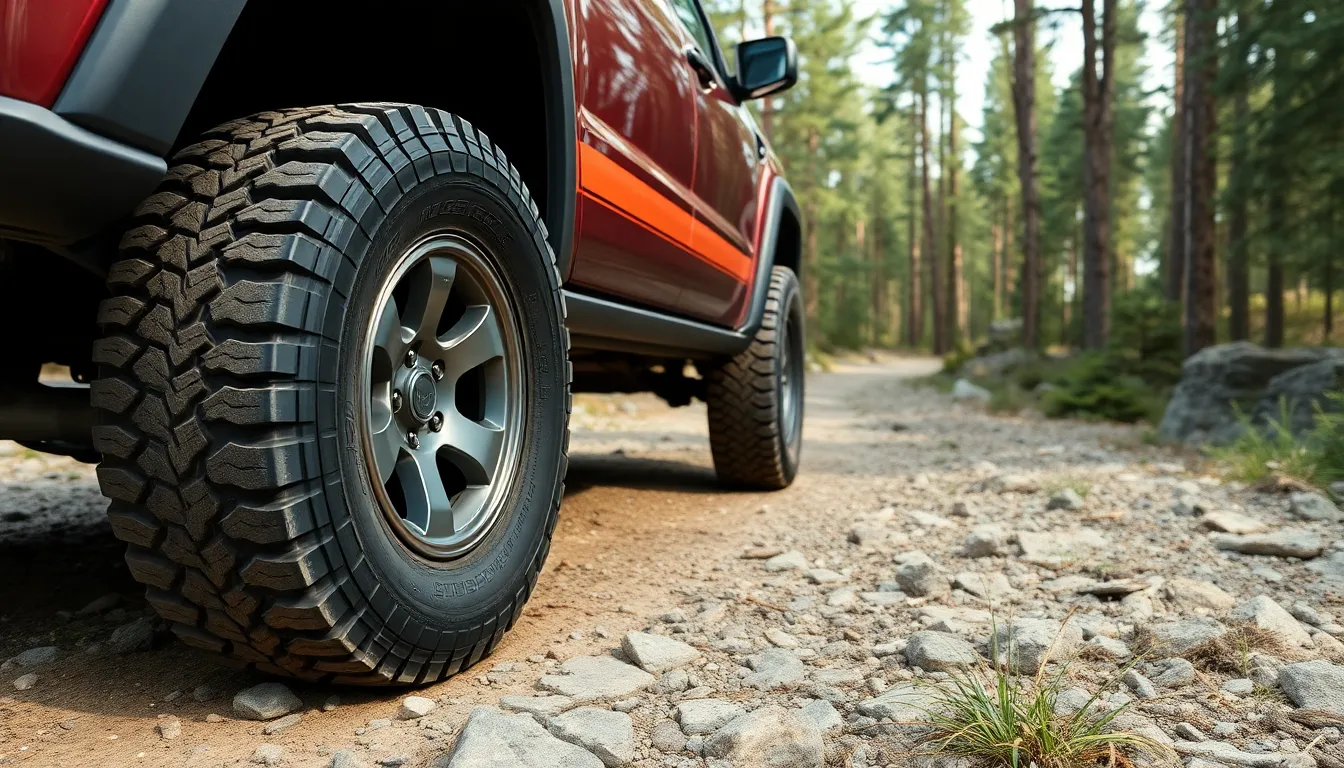
The 285/60R20 tire size offers exact advantages and disadvantages that affect your driving experience and vehicle performance. Understanding these tradeoffs helps you make an well-informed choice when considering these tires for your truck or SUV.
Performance Characteristics
285/60R20 tires enhance off-road capabilities through their large tread blocks and deep sipes that grip various surfaces effectively. Their 11.2-inch width creates a substantial footprint that improves stability and cornering performance on pavement. The generous 6.7-inch sidewall absorbs impacts from rough terrain, providing comfort without sacrificing handling. Water evacuation channels across the tread face boost wet-weather performance, reducing hydroplaning risks during rainy conditions. Ground clearance increases with these tires’ 33.5-inch overall diameter, giving your vehicle better obstacle clearance on trails and uneven surfaces. Tire expert Liam Kohn notes that “customers consistently report improved confidence when driving in adverse conditions after upgrading to this tire size, especially those with larger SUVs and trucks.”
Popular Vehicles That Use 285/60R20 Tires
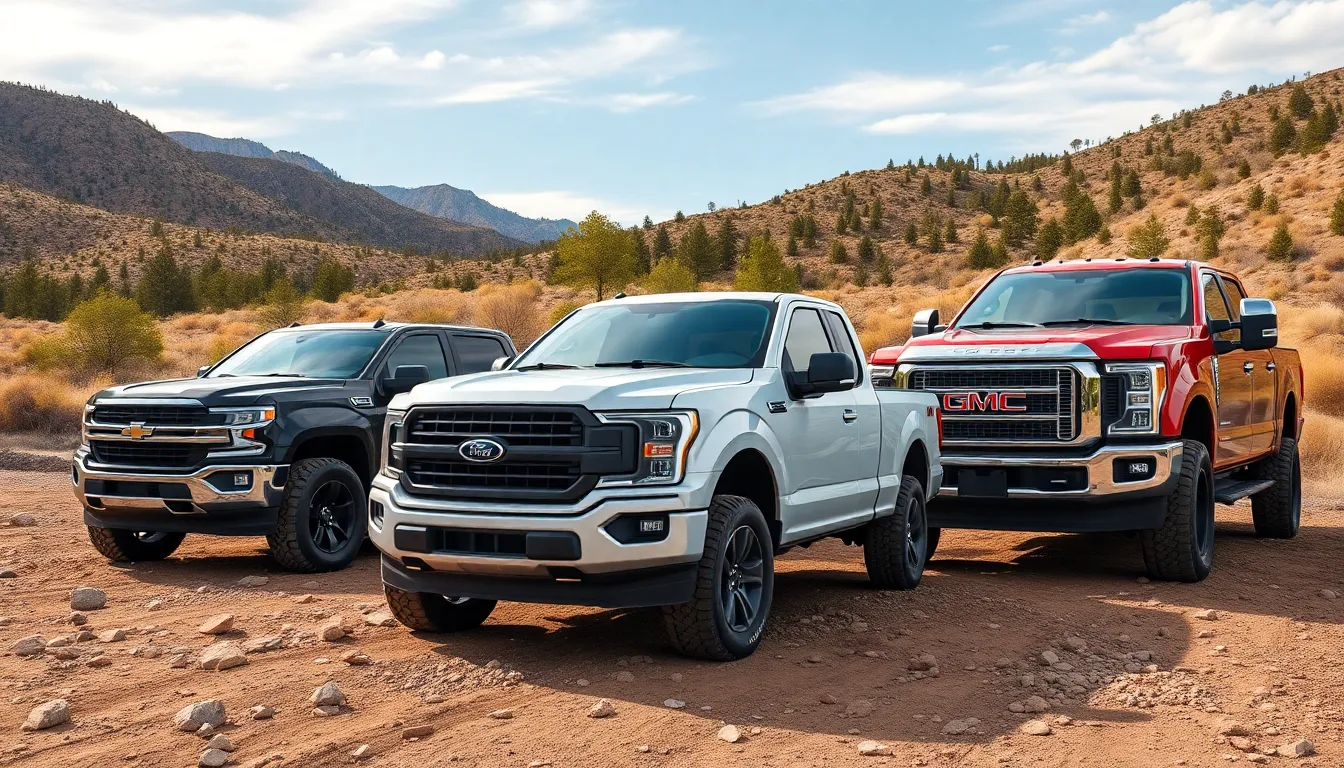
The 285/60R20 tire size commonly appears on several full-size trucks and SUVs that require robust performance capabilities. Chevrolet Silverado models, particularly in their higher trims, frequently come equipped with these tires to maximize towing capacity and off-road potential. Ford F-150 trucks, especially in Raptor or FX4 configurations, use this tire size to enhance ground clearance and trail performance.
GMC Sierra pickups often feature 285/60R20 tires on their AT4 and Denali trims, providing owners with a balance of luxury and capability. Dodge Ram 1500 trucks, particularly in Rebel variants, benefit from these tires’ 33.5-inch overall diameter for improved obstacle clearance. Toyota Tundra models, especially TRD Pro editions, rely on this tire specification to handle challenging terrain while maintaining on-road comfort.
SUVs like the Chevrolet Tahoe and GMC Yukon regularly use this tire size when configured with off-road packages. Jeep Grand Cherokee models in their Trail Hawk trim often upgrade to 285/60R20 tires for enhanced performance. Nissan Armada and Toyota Sequoia owners frequently select this tire dimension when customizing their vehicles for more aggressive looks and capabilities.
Many luxury SUVs including the Cadillac Escalade and Lincoln Navigator offer these tires as options for buyers seeking improved ground clearance without sacrificing refinement. Ford Expedition vehicles, particularly in FX4 configurations, come standard with this tire size to maximize their all-terrain potential while maintaining highway comfort during long trips.
Conclusion
Knowing what 285/60R20 means in inches gives you the power to make smarter tire decisions for your vehicle. At 11.22 inches wide with a 6.73-inch sidewall height and 33.5-inch overall diameter these tires deliver excellent stability comfort and ground clearance for trucks and SUVs.
Remember that upgrading to this size impacts your speedometer accuracy and may require clearance checks but rewards you with improved off-road capability and wet-weather performance.
Whether you drive a Silverado F-150 or Escalade understanding these dimensions helps you select the right tires for your driving needs. The right fit ensures optimal performance handling and safety on any terrain you tackle.
Frequently Asked Questions
What does 285 60 R20 mean on a tire?
This tire code breaks down into three parts: “285” is the width in millimeters (11.2 inches), “60” is the aspect ratio (sidewall height is 60% of the width), and “R20” means it’s a radial tire designed for a 20-inch wheel. These measurements help you select the right tire for your vehicle.
How tall is a 285 60 R20 tire?
A 285/60R20 tire has a total diameter of approximately 33.5 inches (850mm). This measurement includes both the tire and the wheel, from one edge to the opposite edge. This larger diameter provides increased ground clearance compared to smaller tire sizes.
What vehicles typically use 285 60 R20 tires?
These tires are commonly found on full-size trucks like the Chevrolet Silverado, Ford F-150, GMC Sierra, Dodge Ram 1500, and Toyota Tundra. They’re also used on larger SUVs including the Chevrolet Tahoe, GMC Yukon, Jeep Grand Cherokee, Cadillac Escalade, and Lincoln Navigator, particularly in off-road configurations.
How does a 285 60 R20 tire affect speedometer readings?
The larger size of a 285/60R20 tire causes speedometers to display readings approximately 4.6% lower than your actual speed. For example, when your speedometer shows 50 mph, you’re actually traveling at about 52.3 mph. This discrepancy is important to consider in speed-restricted areas to avoid tickets.
What are the benefits of 285 60 R20 tires?
These tires provide enhanced off-road capabilities with large tread blocks and deep sipes. Their width (11.2 inches) improves stability during cornering, while the sidewall height absorbs impacts from rough terrain. They also offer better water evacuation for wet conditions and increased ground clearance for obstacle navigation.
How many revolutions does a 285 60 R20 tire make per mile?
A 285/60R20 tire makes approximately 602-603 revolutions to cover one mile. This is determined by the tire’s circumference, which measures about 105.1-105.2 inches. This information is useful for calculating accurate speed and distance measurements.
Will 285 60 R20 tires fit my vehicle without modifications?
It depends on your vehicle’s specific clearance. These larger tires (wider and taller than many stock sizes) may rub against suspension components or fenders, especially during turns or when carrying heavy loads. Evaluate your wheel wells carefully before upgrading to ensure proper fitment.
How does a 285 60 R20 compare to a 275 55 R20 tire?
A 285/60R20 tire is approximately 1.56 inches taller than a 275/55R20. This height difference causes a 4.6% speedometer discrepancy. The 285 tire is also wider, providing more road contact for improved stability but potentially requiring more clearance in the wheel well.