
Wondering what “245 65r17” actually means in inches? This tire size code might look like a random string of numbers, but it contains crucial measurements that determine how your tire fits and performs on your vehicle.
When you’re shopping for new tires or trying to understand your current set’s specifications, converting tire codes to actual dimensions becomes essential. The “245” represents the tire width in millimeters, while “65” indicates the aspect ratio, and “17” refers to the wheel diameter in inches. Understanding these measurements helps you make informed decisions about replacements and ensures you’re getting the right fit for your car.
Understanding Tire Size Notation: What 245 65R17 Means
Tire size codes contain crucial information about your tire’s dimensions and construction. Breaking down the 245 65R17 code reveals exact measurements that determine how your tire fits and performs on your vehicle.
The first number “245” represents the tire’s width in millimeters, measured from sidewall to sidewall. At 245mm (approximately 9.65 inches), this measurement indicates a moderately wide tire that provides good stability and traction on the road.
Following the width, “65” refers to the aspect ratio or profile of the tire. This percentage tells you that the tire’s height from rim to tread is 65% of its width. In this case, the sidewall height equals 159.25mm (about 6.27 inches), calculated as 65% of 245mm.
The letter “R” indicates the tire’s construction type, specifically “Radial.” Radial tires feature layers of cord material running at 90-degree angles to the direction of travel, providing better stability, fuel efficiency, and longer tread life compared to older bias-ply constructions.
Finally, “17” specifies the wheel diameter in inches, measured from one end of the rim to the other. This number tells you that the tire fits a 17-inch wheel and helps ensure compatibility between your tires and rims.
Additional markings often appear alongside the main tire size code, including:
- Load index: A numerical value indicating how much weight the tire can support
- Speed rating: A letter showing the maximum speed capability of the tire
- M+S or M/S: Designations for mud and snow performance
- Treadwear indicators: Numbers revealing expected tread longevity
Understanding these components helps you make informed decisions when replacing tires, ensuring proper fit and optimal performance for your exact vehicle needs.
Converting 245 65R17 to Inches: The Complete Breakdown
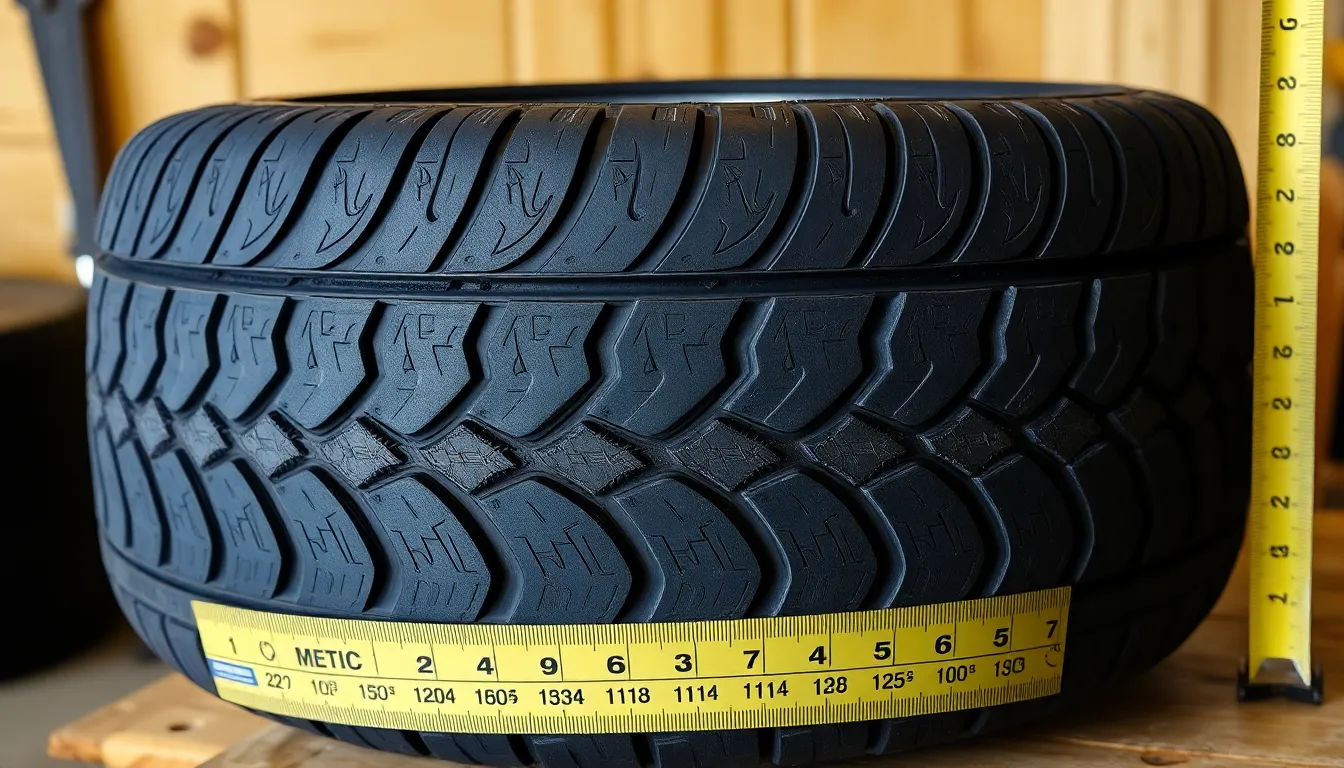
Converting tire measurements from metric to imperial units helps you better understand your vehicle’s specifications. Let’s break down the 245 65R17 tire size into inches with precise calculations.
Calculating the Tire Width in Inches
The tire width of 245mm converts to approximately 9.6 inches when divided by the conversion factor of 25.4 (the number of millimeters in an inch). This calculation transforms the metric measurement into a more familiar imperial unit for many drivers. A width of 9.6 inches indicates a moderately wide tire that provides good road contact and stability during cornering.
Determining the Sidewall Height in Inches
The sidewall height equals 65% of the tire’s width, as indicated by the aspect ratio of 65 in the tire code. Multiplying the width (9.6 inches) by 0.65 gives you a sidewall height of approximately 6.3 inches. This moderate sidewall height offers a balance between comfort and handling, absorbing road imperfections while maintaining responsive steering.
Finding the Overall Diameter in Inches
The overall diameter combines the wheel rim diameter (17 inches) plus twice the sidewall height. Adding 17 inches to twice the sidewall height (2 × 6.3 inches) results in a total diameter of approximately 29.6 inches, commonly rounded to 29.5 inches. This tire has a circumference of about 92.8 inches and completes roughly 683 revolutions per mile. The overall diameter affects your speedometer accuracy, ground clearance, and transmission gearing.
| Measurement | Value (inches) | Calculation Method |
|---|---|---|
| Tire Width | 9.6 | 245 mm ÷ 25.4 |
| Sidewall Height | 6.3 | 9.6 × 0.65 |
| Wheel Diameter | 17 | Direct from tire code |
| Overall Diameter | 29.5 | 17 + (2 × 6.3) |
| Circumference | 92.8 | π × diameter |
Why Tire Size Matters: Performance Implications of 245 65R17

Tire size significantly influences multiple aspects of your vehicle’s performance beyond just fitting properly. The 245/65R17 tire creates exact driving characteristics that affect everything from your dashboard readings to how your vehicle handles on the road.
Impact on Speedometer Accuracy
Changing to a 245/65R17 tire alters your speedometer readings if your vehicle wasn’t originally equipped with this size. With an overall diameter of approximately 29.5 inches, these tires are about 1 inch larger than comparable 245/65R16 tires, resulting in a 3.4% difference in speedometer accuracy. Your vehicle will likely under-report your actual speed and over-report distance traveled after installing larger tires without recalibration. For example, when your speedometer shows 60 mph, you might actually be traveling at about 62 mph, which can be particularly important when considering speed limits and fuel economy calculations.
Effects on Handling and Ride Quality
The 245/65R17 tire’s dimensions create a balanced performance profile for everyday driving. With a width of 9.6 inches, these tires provide an expanded contact patch with the road, improving grip during cornering maneuvers and improving overall traction, particularly on dry surfaces. The generous 6.3-inch sidewall height strikes an effective compromise between comfort and responsiveness, absorbing road imperfections while maintaining handling precision.
The moderately tall sidewalls act as natural shock absorbers, cushioning your ride over bumps and uneven road surfaces. This sidewall height delivers a more comfortable driving experience compared to lower-profile tires, while still offering reasonable steering response. Traction improves with the 245/65R17’s wider footprint, especially valuable during emergency maneuvers or when driving in adverse weather conditions.
It’s worth noting that while the 245/65R17 size offers improved grip and ride comfort compared to smaller tire options, it might slightly reduce fuel efficiency due to increased rolling resistance from the larger contact patch. The performance benefits typically outweigh this minor drawback for most drivers seeking a balance between comfort and capability.
Common Vehicles That Use 245 65R17 Tires

The 245/65R17 tire size is predominantly featured on mid-size SUVs and crossovers where balanced performance characteristics are essential. Many popular light trucks and some pickup trucks come equipped with this versatile tire size from the factory. Vehicle manufacturers select this exact dimension because it offers an optimal combination of width, height, and rim fitment that suits vehicles requiring both comfort and capability.
These tires are specifically approved for 7-8.5 inch wide wheels when used on passenger vehicles. Toyota RAV4, Honda CR-V, and Ford Edge models frequently use this tire size to achieve their designed balance between on-road comfort and light off-road capability. Chevrolet Equinox, Jeep Cherokee, and Nissan Rogue owners will also recognize this dimension as a common factory specification or upgrade option.
The popularity of 245/65R17 tires stems from their excellent load capacity coupled with a comfortable ride profile. SUVs like the Hyundai Santa Fe and Kia Sorento benefit from the tire’s approximately 29.5-inch overall diameter and 9.6-inch width, providing adequate ground clearance while maintaining stability. Pickup truck variants such as the base trim levels of some Ford F-150 and Chevrolet Silverado models occasionally feature this tire size, particularly in older model years.
| Vehicle Category | Examples |
|---|---|
| Mid-size SUVs | Toyota RAV4, Honda CR-V, Ford Edge |
| Crossovers | Chevrolet Equinox, Nissan Rogue, Hyundai Tucson |
| Light Trucks | Ford F-150 (select trims), Chevrolet Silverado (base models) |
| Premium SUVs | Jeep Cherokee, Hyundai Santa Fe, Kia Sorento |
Automotive manufacturers gravitate toward the 245/65R17 size because it offers 683 revolutions per mile, creating an efficient transfer of power while maintaining accurate speedometer readings. The 92.8-inch circumference also contributes to a smooth ride quality that SUV and crossover owners particularly appreciate. This tire size represents an engineering sweet spot where traction, comfort, and load-bearing capabilities converge for vehicles in this class.
Comparing 245 65R17 to Similar Tire Sizes

The 245/65R17 tire size offers exact performance characteristics based on its dimensions. Understanding how this size compares to similar options helps you make informed decisions when replacing or upgrading your tires.
Viable Alternatives and Their Measurements
Several tire sizes serve as viable alternatives to the 245/65R17, each with slightly different dimensions that affect vehicle performance. The most common alternatives include the 235/65R17, 255/60R17, and 265/60R17 sizes.
| Tire Size | Diameter (in) | Width (in) | Sidewall Height (in) | Wheel Diameter (in) |
|---|---|---|---|---|
| 245/65R17 | 29.5 | 9.6 | 6.3 | 17 |
| 235/65R17 | 29.0 | 9.25 | 6.0 | 17 |
| 255/60R17 | 29.0 | 10.0 | 6.0 | 17 |
| 265/60R17 | 29.5 | 10.4 | 6.3 | 17 |
The 235/65R17 option runs approximately 0.5 inches smaller in diameter and slightly narrower than the 245/65R17. This smaller size might improve fuel economy but offers less ground clearance and slightly reduced stability during cornering.
For those seeking a wider footprint without changing overall diameter, the 265/60R17 maintains the same 29.5-inch diameter while providing a wider 10.4-inch tread. This wider profile enhances grip and stability during cornering but may increase road noise and rolling resistance.
The 255/60R17 presents a compromise between width and diameter, measuring 29 inches in diameter (0.5 inches smaller than the 245/65R17) with a wider 10-inch tread. This option balances handling improvements with minimal impact on speedometer accuracy.
Each alternative maintains the same 17-inch wheel diameter compatibility, making them physically mountable on the same wheels, though the ideal rim width varies. The 245/65R17 fits optimally on wheels 7 to 8.5 inches wide for passenger vehicles and 7 to 8 inches wide for light trucks.
Choosing between these alternatives depends on your exact performance goals, vehicle specifications, and driving conditions. The slight variations in dimensions create meaningful differences in handling, ride comfort, and fuel efficiency that match different driving preferences.
Buying Guide: What to Consider When Shopping for 245 65R17 Tires

Load Index and Speed Rating
Load index and speed ratings are crucial factors when selecting 245/65R17 tires. The load index indicates how much weight each tire can safely carry, typically appearing as a number after the tire size. Your vehicle’s manual specifies the minimum required load index, but choosing a higher rating provides extra capacity for carrying heavy loads. Speed ratings, represented by a letter, determine the maximum safe speed for your tires under optimal conditions. Matching or exceeding your vehicle’s recommended speed rating ensures optimal performance and safety during high-speed driving.
Tread Pattern Options
Tread patterns on 245/65R17 tires significantly impact performance across different driving conditions. All-season tread designs feature moderate grooves and sipes that balance wet traction, dry grip, and snow capability. Highway tread patterns offer continuous ribs that maximize road contact for better stability and lower noise levels on paved surfaces. For off-road enthusiasts, aggressive tread patterns with large blocks and deep channels provide superior traction in mud, gravel, and rough terrain. Winter-exact treads incorporate additional sipes and specialized rubber compounds that maintain flexibility in freezing temperatures.
Wheel Width Compatibility
245/65R17 tires fit optimally on wheels between 7 and 8.5 inches wide for passenger applications. Mounting these tires on wheels outside this range compromises performance and safety. Wheels that are too narrow cause the tire to bulge in the middle, reducing traction and increasing wear on the center tread area. Excessively wide wheels stretch the tire sidewall, potentially causing poor handling, reduced load capacity, and increased risk of sidewall damage. Confirming your wheel width falls within the manufacturer’s recommended range guarantees proper tire performance and longevity.
Alternative Size Considerations
Comparing the 245/65R17 with similar sizes helps determine if it’s the optimal choice for your exact needs. The 235/65R17 offers a slightly smaller diameter and narrower width, improving fuel economy but providing less stability during cornering. Tire dimensions influence many vehicle characteristics including ground clearance, gearing, and speedometer accuracy. Any important changes from your vehicle’s original tire specifications might require additional modifications or recalibration. Consult with a tire professional before switching sizes to ensure compatibility with your vehicle’s design parameters and performance requirements.
Conclusion
Understanding the 245/65R17 tire size gives you essential knowledge for making informed vehicle decisions. These tires offer a balanced profile with their 9.6-inch width and 29.5-inch overall diameter making them ideal for SUVs and crossovers.
When shopping for replacements consider load ratings speed requirements and tread patterns that match your driving needs. The right tire choice impacts everything from handling to fuel economy.
Whether you stick with 245/65R17 or explore alternatives like 235/65R17 or 265/60R17 you’ll now have the dimensional understanding to select tires that deliver optimal performance for your exact vehicle and driving conditions.
Frequently Asked Questions
What does the tire size 245/65R17 mean?
The code 245/65R17 breaks down as follows: 245 indicates the tire width in millimeters (9.65 inches), 65 represents the aspect ratio (the sidewall height is 65% of the width), R means radial construction, and 17 denotes the wheel diameter in inches. This standardized format helps consumers understand tire dimensions when shopping for replacements.
What is the overall diameter of a 245/65R17 tire?
The overall diameter of a 245/65R17 tire is approximately 29.5 inches. This measurement is calculated by adding the wheel rim diameter (17 inches) to twice the sidewall height (6.3 inches × 2). The overall diameter affects speedometer accuracy, ground clearance, and transmission gearing.
How does tire width affect performance?
The 245mm width offers a moderately wide footprint that balances several performance factors. It provides good stability and traction during cornering and emergency maneuvers. While wider tires generally improve grip and handling, they may slightly reduce fuel efficiency due to increased rolling resistance. This width creates an optimal balance for most driving conditions.
What vehicles typically use 245/65R17 tires?
This tire size is predominantly used on mid-size SUVs and crossovers, as well as some light trucks. Popular models include the Toyota RAV4, Honda CR-V, Ford Edge, Jeep Cherokee, and Subaru Outback. Manufacturers choose this size because it offers an ideal combination of comfort, capability, and load capacity for these vehicle types.
Can I replace my current tires with a different size?
Yes, but with important considerations. Alternative sizes like 235/65R17, 255/60R17, or 265/60R17 must maintain a similar overall diameter to avoid affecting speedometer accuracy and vehicle performance. Any replacement should be compatible with your wheel width (245/65R17 tires fit 7-8.5 inch wheels) and meet your vehicle’s load requirements. Consult a tire professional before making changes.
What should I look for when buying 245/65R17 tires?
Focus on the load index and speed rating to ensure safety and performance. Consider tread patterns based on your driving conditions: all-season for general use, highway treads for comfort and longevity, all-terrain for occasional off-road use, or winter tires for snow and ice. Verify wheel width compatibility (7-8.5 inches) and consult your vehicle’s manual for specific requirements.
How does aspect ratio affect ride quality?
The aspect ratio of 65 means the tire’s sidewall height is 65% of its width, resulting in a 6.3-inch sidewall. This moderately tall sidewall provides good shock absorption over bumps and potholes, delivering a more comfortable ride. Lower aspect ratios offer better handling but harsher rides, while higher ratios prioritize comfort over cornering performance.
Will changing to 245/65R17 tires affect my speedometer?
If your vehicle didn’t originally come with 245/65R17 tires, switching to this size might affect speedometer readings. A larger overall diameter than your original tires will cause your speedometer to under-report your actual speed, while a smaller diameter will make it over-report. For safety and compliance with speed limits, maintain a similar overall diameter when changing tire sizes.