Are you confused about the correct 2017 Honda Civic tire size for your vehicle? Finding the right tires isn’t just about aesthetics—it’s essential for your safety, handling, and fuel economy.
The 2017 Honda Civic comes with different tire size options depending on the exact trim level you own. Whether you’re driving the base LX model or the sportier Si variant, understanding your vehicle’s exact tire specifications will save you time and money when it’s time for a replacement. Let’s explore everything you need to know about your Civic’s tire dimensions, so you can make the best choice for your driving needs.
Understanding 2017 Honda Civic Tire Specifications
The 2017 Honda Civic features exact tire dimensions that vary across different trim levels. Each tire specification includes three critical measurements: width, aspect ratio, and wheel diameter. For example, a P215/55R16 tire has a width of 215 millimeters, an aspect ratio of 55% (meaning the sidewall height is 55% of the width), and fits on a 16-inch wheel.
Tire specifications also include load index and speed rating information. The load index (typically a number between 75-105 for passenger vehicles) indicates how much weight each tire can safely support. Meanwhile, the speed rating (represented by a letter like H, V, or W) shows the maximum speed capability of the tire under optimal conditions.
Reading the sidewall markings on your 2017 Civic’s tires reveals additional useful information. These markings display the manufacturer, model name, DOT code for manufacturing date, treadwear rating, traction grade, and temperature resistance. “I always remind customers to check these specifications before purchasing new tires,” notes Liam Kohn, “because even small variations can significantly impact vehicle performance.”
Original equipment (OE) tires for the 2017 Honda Civic were carefully selected by Honda engineers to complement the vehicle’s performance characteristics. They balanced factors including handling precision, ride comfort, road noise, and fuel efficiency to match each trim level’s intended driving experience. Many Civic owners report that maintaining these OE specifications provides the most consistent driving experience when replacing worn tires.
Stock Tire Sizes for Different 2017 Honda Civic Trims
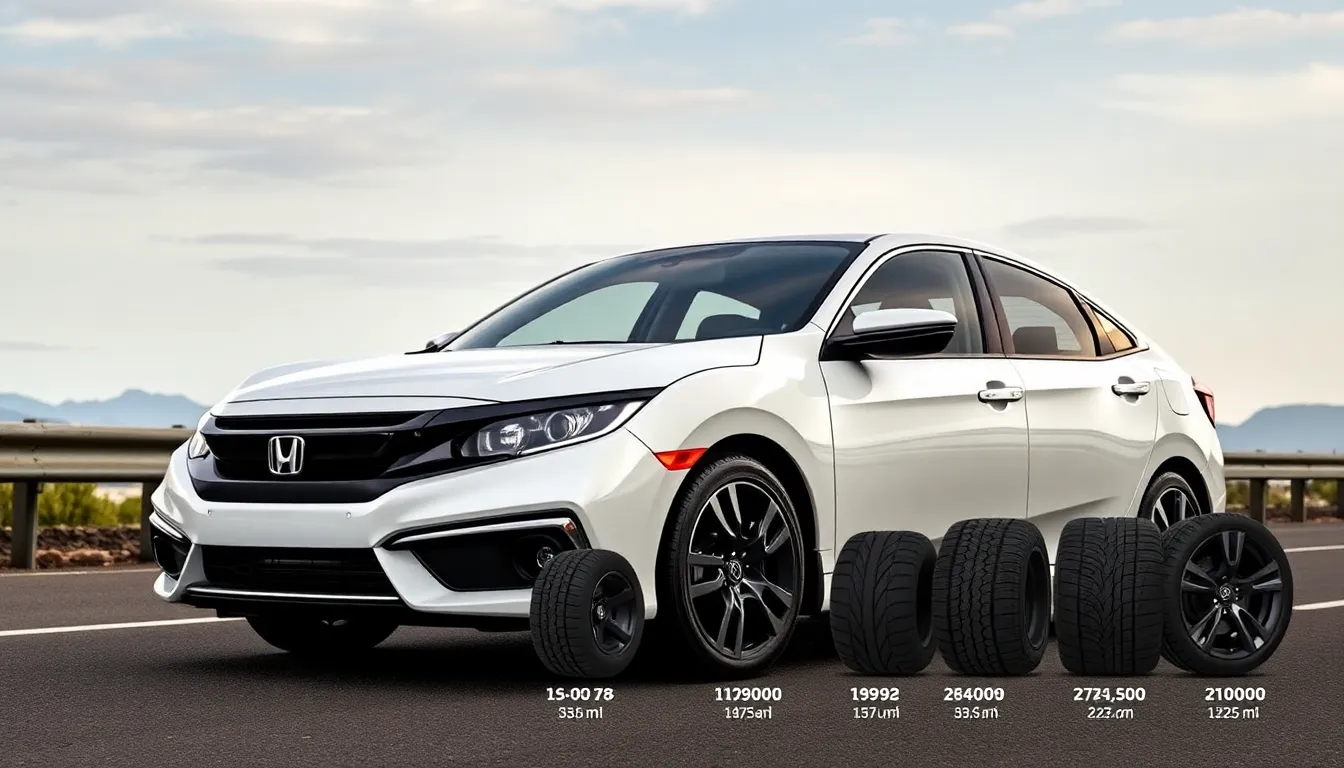
The 2017 Honda Civic comes equipped with exact tire sizes optimized for each trim level’s performance characteristics. These factory-installed tires are carefully selected to complement the vehicle’s handling, comfort, and fuel efficiency across the model range.
LX and EX Trim Tire Dimensions
LX and EX trims of the 2017 Honda Civic typically feature 215/55R16 tires as standard equipment. This tire size provides a balanced combination of comfort and efficiency for daily driving. Some EX variants like the EX-L Sedan continue with the 215/55R16 size, while others such as the EX Hatchback and EX-T upgrade to 215/50R17 tires for improved handling characteristics. These mid-range trims offer a compromise between comfort and sportiness, making them popular choices for many Civic owners.
Sport and Touring Trim Tire Dimensions
Sport and Touring trims come with larger wheels and corresponding tire sizes to enhance performance. These premium trims typically run on 215/50R17 tires, though many Touring models upgrade to 235/40ZR18 tires for better grip and handling response. The wider 235mm tread width and lower 40-series profile on these sporty variants contribute to more precise cornering and better road feel. Touring models benefit from these performance-oriented tires when handling winding roads or highway on-ramps.
Type R Tire Specifications
The high-performance Civic Type R stands out with significantly more aggressive tire specifications. Honda equips this track-focused model with 245/30R20 tires mounted on 20-inch wheels. These ultra-wide 245mm tires with extremely low-profile 30-series sidewalls maximize grip during hard cornering and high-speed maneuvers. Type R’s tire setup reflects its purpose as the performance flagship of the Civic lineup, delivering exceptional traction and response for enthusiast drivers seeking track-day capabilities.
| Trim | Typical Tire Sizes |
|---|---|
| LX, EX | 215/55R16, 215/50R17 |
| Sport, Touring | 215/50R17, 235/40ZR18 |
| Type R | 245/30R20 |
How to Read Your Honda Civic Tire Size Information
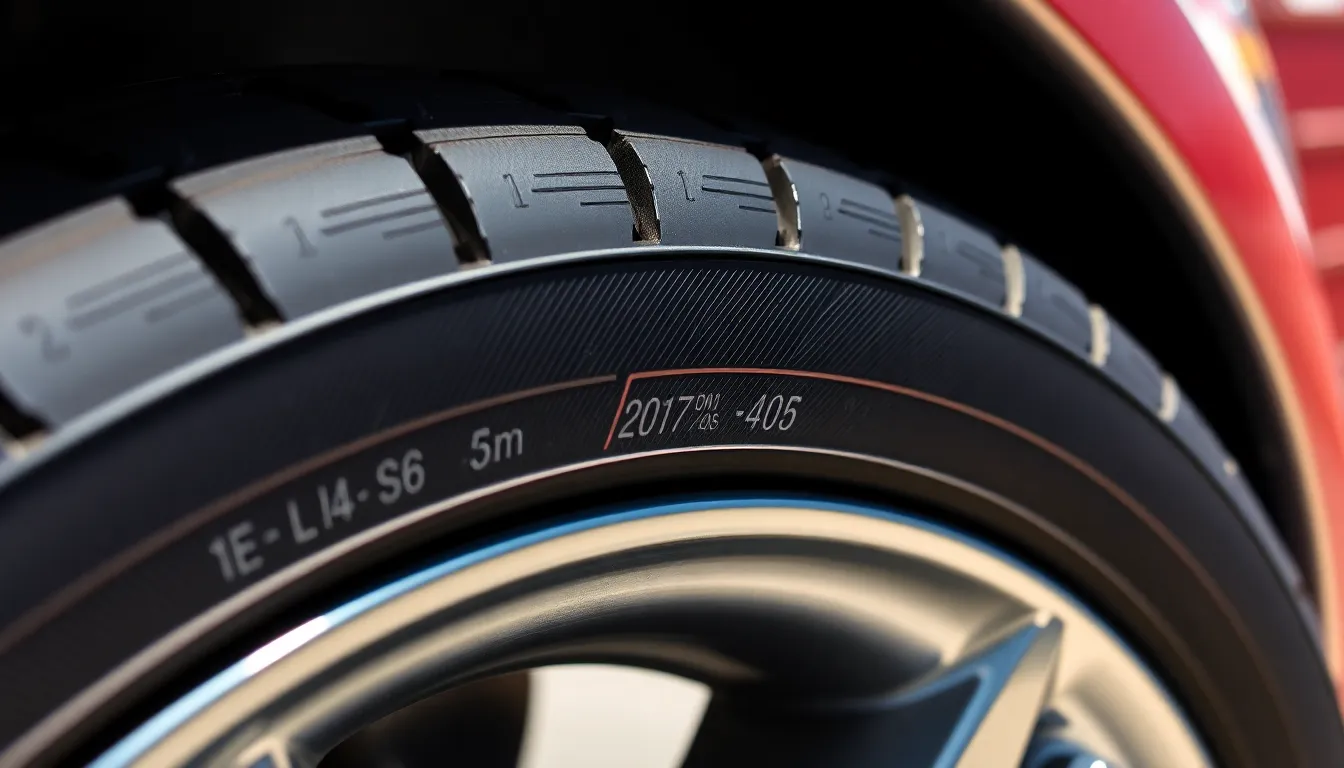
Understanding the tire size information on your 2017 Honda Civic helps you make informed decisions when replacing tires. The series of numbers and letters on your tire’s sidewall contains critical specifications about dimensions, construction, and performance capabilities.
Decoding the Sidewall Markings
Tire sidewalls display a standardized code that reveals your tire’s exact specifications. For example, a tire size like 215/50R17 91H breaks down into exact components:
- 215 represents the tire width in millimeters measured from sidewall to sidewall
- 50 indicates the aspect ratio, meaning the tire’s height is 50% of its width
- R signifies radial construction, the most common tire design type
- 17 shows the wheel diameter in inches that the tire fits
- 91 is the load index number corresponding to weight capacity
- H denotes the speed rating, indicating maximum safe operating speed
These markings appear on both sides of your tire, with additional information about manufacturing date, traction ratings, and temperature resistance also included on the sidewall.
Speed and Load Ratings Explained
Speed and load ratings directly impact your Honda Civic’s performance and safety capabilities. The load index (like 91 or 93) corresponds to a exact weight capacity – for instance, 91 equals approximately 615 kg per tire. Higher numbers indicate greater load-carrying capacity.
Speed ratings appear as letters and specify the maximum sustained speed your tires can safely handle:
| Speed Rating | Maximum Speed |
|---|---|
| H | 130 mph (210 km/h) |
| V | 149 mph (240 km/h) |
| W | 168 mph (270 km/h) |
| Y | 186 mph (300 km/h) |
Most 2017 Honda Civic LX and EX models use H-rated tires (215/55R16 93H), while sportier trims like the Si often feature W-rated tires (235/40R18 91W) for enhanced high-speed stability. Always match or exceed your vehicle’s original speed and load ratings when replacing tires to maintain proper performance characteristics and safety margins.
Upgrading Your 2017 Honda Civic Tires
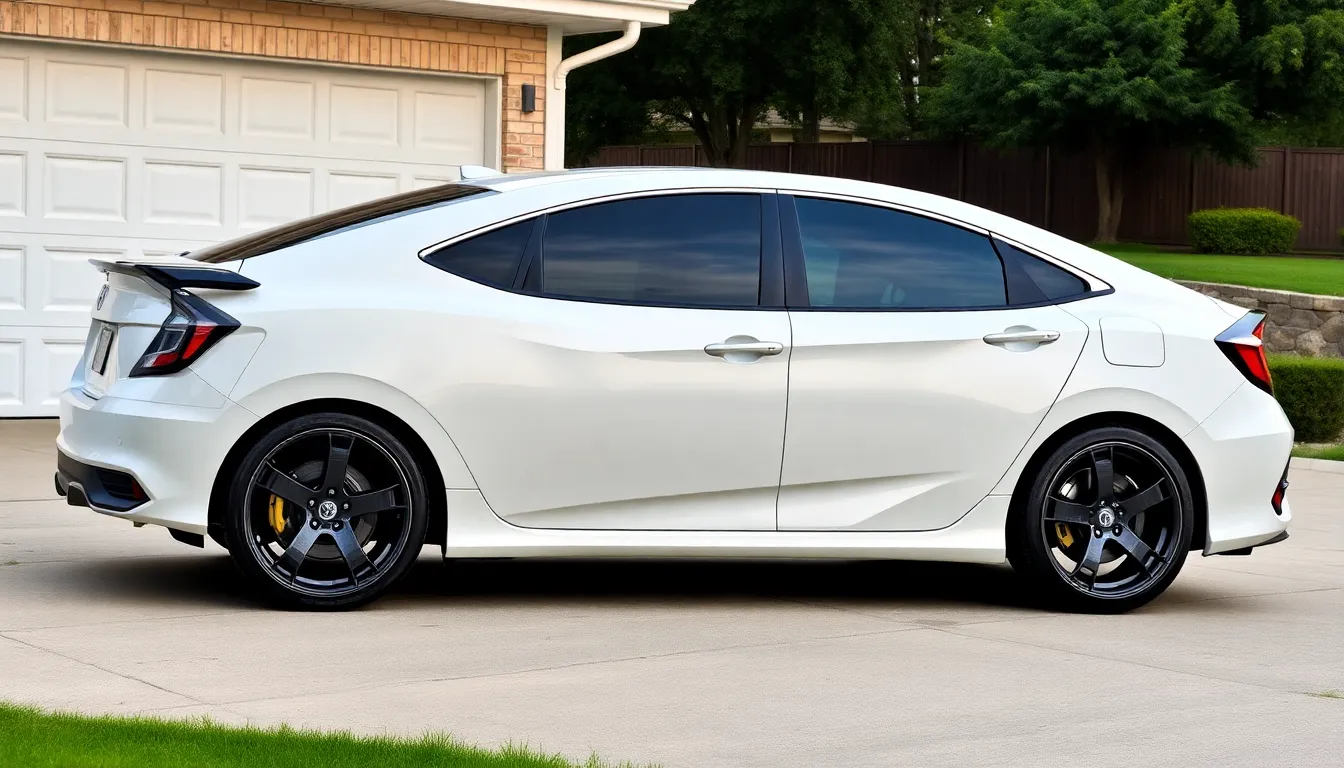
Upgrading tires on your 2017 Honda Civic requires maintaining the correct tire diameter and load rating to preserve handling characteristics and safety. Many Civic owners opt for larger wheels and tires, such as moving from 16-inch to 17-inch or 18-inch wheels, though this might require suspension adjustments or speedometer recalibration. The most straightforward upgrades use compatible tires in the 215/50R17 or 215/55R16 size ranges that work with factory wheels, while 235/40R18 tires fit 18-inch wheels designed specifically for sportier Civic trims.
Compatible Aftermarket Options
Many aftermarket tire brands produce options in OEM sizes for the 2017 Civic. All-season tires offer balanced performance year-round and remain popular for daily drivers seeking reliability. Performance tires enhance grip and handling dynamics, making them ideal for sportier trims or enthusiastic drivers wanting sharper response. Touring tires focus on comfort, quieter rides, and extended tread life for those prioritizing a smooth driving experience. Manufacturers like Goodyear, Michelin, Bridgestone, and Continental produce quality tires in these sizes, creating abundant choices for replacements or upgrades to suit your exact needs.
Performance vs. All-Season Considerations
All-season tires deliver versatility and safety across various weather conditions including light snow and rain. These tires typically last longer and provide better comfort for daily commuting, making them perfect for Civic owners in variable climates. Performance tires offer superior cornering stability and grip on dry pavement but tend to wear faster and perform poorly in cold or snowy conditions. These specialized tires complement Civic Si or sport trims where handling precision takes priority over all-weather capability. Your selection between these tire types should account for your local climate, driving habits, and whether you value longevity and comfort over maximum grip and responsiveness.
Seasonal Tire Recommendations for the 2017 Civic

Selecting the right seasonal tires for your 2017 Honda Civic enhances safety and performance throughout the year. Different weather conditions demand exact tire characteristics to maintain optimal handling and traction.
Winter Tire Options
Winter tires feature specialized rubber compounds that remain flexible in freezing temperatures, providing superior grip on snow and ice. Most 2017 Civic trims accommodate winter tires in sizes 215/55R16 or 215/50R17, preserving proper handling while improving cold-weather safety. These sizes work effectively across multiple trim levels, including EX Sedan and EX-L models. Popular winter tire options include the Bridgestone Blizzak, Michelin X-Ice, and Goodyear Ultra Grip, all designed with deeper treads and more pronounced siping patterns to channel away slush and maintain contact with road surfaces.
Summer Performance Tires
Summer performance tires deliver enhanced dry and wet traction during warmer months with specialized compounds that excel in temperatures above 45°F. The 215/50R17 size fits many 2017 Civic trims perfectly, while sportier variants benefit from the 235/40ZR18 size for improved cornering stability and responsive handling. These performance-oriented options typically feature stiffer sidewalls and specialized tread patterns that maximize road contact during aggressive driving. Michelin Pilot Sport, Bridgestone Potenza, and Continental ExtremeContact tires represent top choices for Civic owners seeking sharper steering response and improved grip during summer driving conditions.
Maintaining Proper Tire Pressure and Rotation

Proper Tire Pressure for Your 2017 Honda Civic
Proper tire pressure is essential for optimal performance and longevity of your 2017 Honda Civic tires. The recommended tire pressure for most 2017 Civic models is approximately 32 psi, though this varies slightly depending on your exact trim and tire size. Your vehicle’s exact recommended pressure is listed on the driver’s side door jamb placard, which serves as the definitive guide for maintaining correct inflation. Underinflated tires lead to increased friction, causing premature wear and reduced fuel economy. Overinflated tires create less contact with the road surface, resulting in compromised traction and a harsher ride quality. Checking your tire pressure monthly ensures consistent performance across all seasons and driving conditions.
Tire Rotation Schedule and Patterns
Tire rotation extends the lifespan of your Civic’s tires by promoting even wear across all four wheels. A standard rotation interval for the 2017 Honda Civic falls between 5,000 and 7,500 miles, aligning with your regular oil change schedule for convenience. Front-wheel drive Civics experience more wear on the front tires due to the engine weight and driving forces. The most common rotation pattern for non-directional tires on a Civic involves moving the front tires to the rear in a straight swap, while the rear tires move to the opposite sides at the front. This pattern equalizes wear patterns and maximizes tire life, particularly important for the 215/50R17 tires on EX Hatchback, EX-L, and EX-T trims or the 215/55R16 tires on LX and EX Sedan models. Regular rotation also helps maintain balanced handling characteristics and consistent braking performance.
Benefits of Regular Tire Maintenance
Regular tire maintenance delivers important benefits for your 2017 Civic’s performance and safety profile. Consistent pressure checks and rotation schedules improve fuel efficiency by reducing rolling resistance, potentially saving you hundreds of dollars annually in fuel costs. Properly maintained tires provide enhanced traction in both dry and wet conditions, particularly important for the all-season tires typically equipped on most Civic trims. Even wear patterns from regular rotation ensure all four tires maintain similar tread depths, preventing handling imbalances that could compromise control during emergency maneuvers. Monitoring your tire condition also allows early detection of alignment issues or suspension problems before they cause more extensive damage or safety concerns.
Conclusion
Choosing the right tires for your 2017 Honda Civic isn’t just about finding replacement rubber – it’s about maintaining your vehicle’s performance safety and efficiency. Whether you stick with the OE specifications or upgrade to a different size remember to maintain proper tire pressure and follow regular rotation schedules.
Your Civic’s handling fuel economy and overall driving experience depend on selecting tires that match your exact trim level and driving conditions. From the standard 215/55R16 on LX models to the performance-focused 245/30R20 on Type R variants each size offers unique benefits.
By understanding tire codes and considering seasonal needs you’ll make informed decisions that keep your Honda performing at its best while ensuring your safety on the road.
Frequently Asked Questions
What are the standard tire sizes for the 2017 Honda Civic?
The 2017 Honda Civic comes with different tire sizes depending on the trim level. The LX and EX trims typically use 215/55R16 tires, while some EX variants feature 215/50R17 tires. Sport and Touring trims come with 215/50R17 or 235/40ZR18 tires. The high-performance Type R is equipped with 245/30R20 tires for maximum traction and responsiveness.
How do I read the tire size information on my Honda Civic?
Tire size follows a standardized code on the sidewall. For example, in 215/55R16 93H: 215 is the width in millimeters, 55 is the aspect ratio (percentage of width to height), R indicates radial construction, 16 is the wheel diameter in inches, 93 is the load index, and H is the speed rating. This information helps you select the right replacement tires for your vehicle.
What is the recommended tire pressure for a 2017 Honda Civic?
The recommended tire pressure for most 2017 Honda Civic models is approximately 32 psi, though this can vary slightly by trim and tire size. You can find the exact specification on a sticker located on the driver’s side door jamb. Check tire pressure monthly to ensure optimal performance, fuel economy, and tire longevity.
How often should I rotate the tires on my 2017 Honda Civic?
You should rotate your 2017 Honda Civic’s tires every 5,000 to 7,500 miles. Regular rotation ensures even wear across all four tires, extending their lifespan and maintaining balanced handling. Follow the recommended rotation pattern for non-directional tires to maximize performance and safety benefits.
Can I upgrade to larger tires on my 2017 Honda Civic?
Yes, you can upgrade to larger tires on your 2017 Honda Civic, but you must maintain the correct overall tire diameter and appropriate load rating. Many owners upgrade from 16-inch to 17-inch or 18-inch wheels. However, significant size changes may require suspension adjustments or speedometer recalibration to preserve handling characteristics and safety.
What are the best winter tires for the 2017 Honda Civic?
The best winter tires for the 2017 Honda Civic include the Bridgestone Blizzak and Michelin X-Ice series. These tires maintain flexibility in freezing temperatures and provide superior grip on snow and ice. Most Civic trims can accommodate winter tires in sizes 215/55R16 or 215/50R17, ensuring safe winter driving performance.
What’s the difference between all-season and performance tires for the Civic?
All-season tires offer versatility, reasonable performance in various conditions, and typically longer tread life. Performance tires provide superior grip and handling but may wear faster and perform poorly in adverse weather. Your choice depends on driving habits and local climate conditions. All-season tires are better for everyday driving, while performance tires excel in dry conditions.
Why is the correct tire size important for my Honda Civic?
The correct tire size is crucial for your Honda Civic because it directly affects safety, handling, and fuel economy. Using the wrong size can lead to inaccurate speedometer readings, compromised braking performance, and altered handling characteristics. Honda engineers selected specific tire sizes for each trim to optimize the vehicle’s performance, so maintaining these specifications ensures a consistent driving experience.