Are you trying to find the right 2012 Chevy Traverse tire size but feeling overwhelmed by the options? Understanding your vehicle’s exact tire specifications is crucial for optimal performance, safety, and fuel efficiency.
The 2012 Chevrolet Traverse came equipped with different tire sizes depending on the exact trim level and wheel package. Whether you’re replacing worn tires, upgrading for better performance, or preparing for seasonal changes, knowing the correct tire size for your Traverse prevents costly mistakes and ensures proper fitment. Let’s jump into everything you need to know about your Chevy Traverse’s tire specifications so you can make an well-informed choice.
Understanding the 2012 Chevy Traverse Tire Specifications
The 2012 Chevy Traverse comes equipped with exact tire sizes that vary based on trim level and wheel package. Each tire size consists of three key measurements that determine its dimensions and performance characteristics. These measurements include width, aspect ratio, and rim diameter, all working together to ensure proper fitment and optimal performance.
OEM Tire Sizes by Trim Level
The factory-installed tire sizes for the 2012 Chevy Traverse depend on your exact trim level:
- LS and 1LT trims: P255/65R18 (18-inch wheels)
- 2LT and LTZ trims: P255/55R20 (20-inch wheels)
Many Traverse owners report that the 18-inch tire setup provides a smoother ride over rough roads, while the 20-inch configuration offers improved handling and a more premium appearance. Liam Kohn noticed during his test drives that “the difference in ride comfort between the 18-inch and 20-inch setups is immediately noticeable, especially on pothole-filled city streets.”
Decoding Tire Size Markings
Tire size markings on your 2012 Traverse follow a standardized format:
- P255: Indicates a tire width of 255 millimeters from sidewall to sidewall
- 65R or 55R: Represents the aspect ratio (65% or 55% of the width)
- 18 or 20: Specifies the wheel diameter in inches
The “P” prefix designates passenger vehicle tires, while “R” indicates radial construction. Understanding these markings helps you select compatible replacement tires that maintain proper speedometer calibration and vehicle handling characteristics.
Load and Speed Ratings
Beyond size dimensions, your Traverse tires include important performance ratings:
| Rating Type | LS/1LT (18″) | 2LT/LTZ (20″) |
|---|---|---|
| Load Index | 111 | 111 |
| Load Capacity | 2,403 lbs per tire | 2,403 lbs per tire |
| Speed Rating | T (118 mph) | H (130 mph) |
Factory Standard Tire Sizes for the 2012 Chevy Traverse
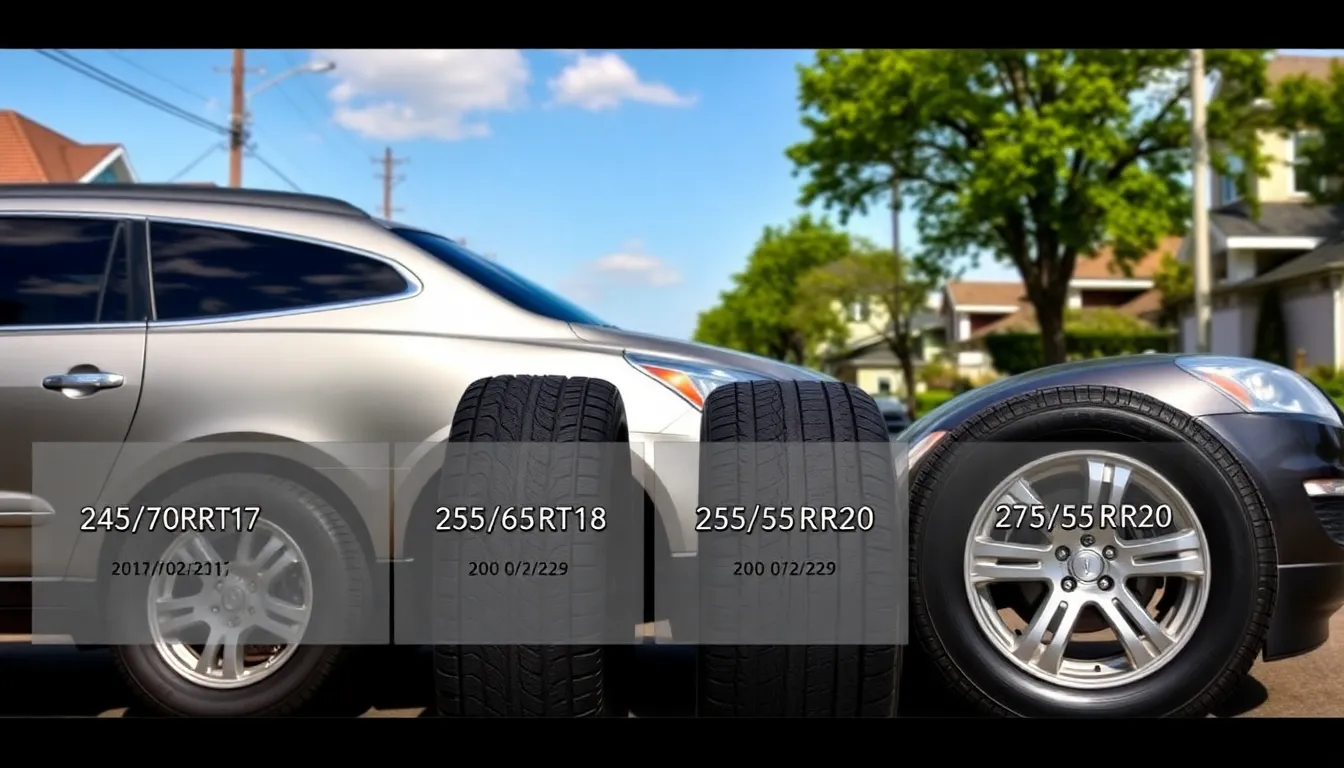
The 2012 Chevrolet Traverse comes equipped with exact factory tire sizes that vary according to trim level. These original equipment specifications are carefully matched to the vehicle’s performance characteristics, load requirements, and handling capabilities.
Base Model Tire Size
The LS trim of the 2012 Chevy Traverse features 245/70R17 tires as standard equipment. This tire size comes installed on both the All-Wheel Drive (AWD) and Front-Wheel Drive (FWD) versions of the base model. The 17-inch wheel diameter provides a good balance of comfort and performance for everyday driving conditions. These tires offer ample sidewall height, contributing to a smoother ride over rough road surfaces and potholes compared to the larger wheel options available on higher trim levels.
LT and LTZ Trim Tire Specifications
The LT trim levels of the 2012 Traverse typically use either 255/65R18 or 255/55R20 tires depending on the exact configuration. The 18-inch tire setup (255/65R18) comes standard on many LT models, offering improved handling over the base model while maintaining reasonable ride comfort. The optional 20-inch configuration (255/55R20) provides enhanced cornering capability with a more aggressive stance.
For the premium LTZ trim, 255/55R20 tires come as standard equipment on both AWD and FWD variants. These larger diameter wheels with lower-profile tires give the top-tier Traverse a more upscale appearance while improving steering response and handling dynamics. The wider 255mm tread width on both the LT and LTZ models provides increased stability and traction compared to the base model’s narrower tires.
You can verify your exact Traverse’s original tire size by checking either the driver’s side door jamb sticker or examining the sidewall of your current tires if they’re the original equipment.
Alternative Tire Options Compatible with the 2012 Traverse
The 2012 Chevy Traverse accommodates several tire size options that maintain optimal performance while offering flexibility for different driving needs. Your Traverse can safely use any reputable tire brand that matches the factory sizes (245/70R17, 255/65R18, or 255/55R20) without compromising handling or accuracy of vehicle systems.
Upgrading Tire Size: Possibilities and Limitations
Upgrading your Traverse’s tire size comes with both opportunities and constraints to consider. The 2012 Traverse offers room for some customization, particularly if you’re interested in moving up to the 20-inch wheel option (255/55R20) that comes standard on higher trims. This upgrade provides enhanced visual appeal while remaining within factory-approved specifications.
Size modifications beyond the OE options aren’t recommended as they can create multiple issues. Exceeding factory specifications may result in clearance problems with wheel wells and suspension components. Your vehicle’s fuel economy typically suffers with oversized tires, and handling characteristics often change in unpredictable ways. For maintaining proper functionality of crucial systems like ABS and traction control, keep the overall tire diameter within 3% of the original specifications.
Winter and All-Terrain Tire Recommendations
Winter driving demands specialized tires for optimal safety in cold weather conditions. For snowy regions, studless winter tires in the factory sizes (particularly 245/70R17 or 255/65R18) deliver necessary traction and control. Look for tires featuring the Three-Peak Mountain Snowflake symbol, which indicates they’ve passed severe winter condition tests.
All-terrain options offer versatility for mixed driving conditions without sacrificing on-road comfort. The 255/65R18 size provides an excellent balance for Traverse owners who occasionally venture off paved roads. These tires deliver improved traction on unpaved surfaces while maintaining comfortable highway performance for daily driving.
Many all-terrain tires in compatible sizes feature reinforced sidewalls for added protection against road hazards commonly encountered during light off-road use. Your selection should prioritize tires that balance off-road capability with the on-road comfort expected from a family crossover like the Traverse.
How to Read Your Chevy Traverse Tire Size Information
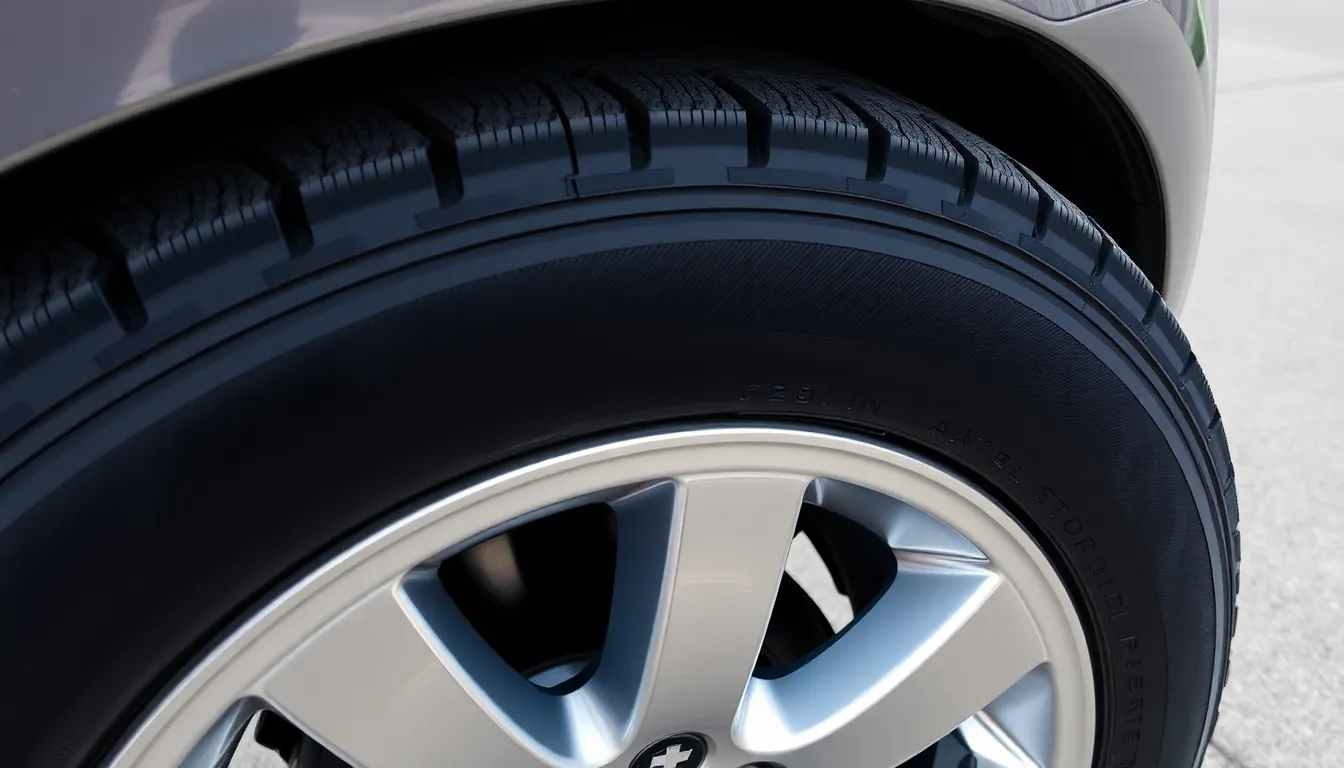
Understanding your Traverse’s tire size markings helps you make informed decisions when replacing tires. Each number and letter on your tire’s sidewall represents exact measurements that ensure proper fit and performance for your vehicle.
The tire size format follows a standard pattern consisting of three main components:
- Width measurement – The first number (like 245 or 255) indicates the tire width in millimeters from sidewall to sidewall.
- Aspect ratio – The second number (70, 65, or 55) represents the tire’s profile height as a percentage of its width.
- Wheel diameter – The final number after the “R” (17, 18, or 20) specifies the wheel diameter in inches that the tire fits.
For example, in a 255/65R18 tire size, 255 is the width in millimeters, 65 means the sidewall height is 65% of the width, and 18 indicates it fits an 18-inch wheel.
You can locate your Traverse’s tire size information in two places:
- On the sidewall of your current tires
- On the vehicle placard in the driver’s side door jamb
Checking both locations ensures you’re using the manufacturer-recommended size for your exact trim level. The 2012 Chevy Traverse LS trim uses 245/70R17 tires, LT trims use either 255/65R18 or 255/55R20, and LTZ trims come standard with 255/55R20 tires.
Correctly interpreting these numbers gives you the confidence to purchase compatible replacement tires that maintain your Traverse’s handling, safety, and performance characteristics.
Benefits of Maintaining Proper Tire Size for Your Traverse
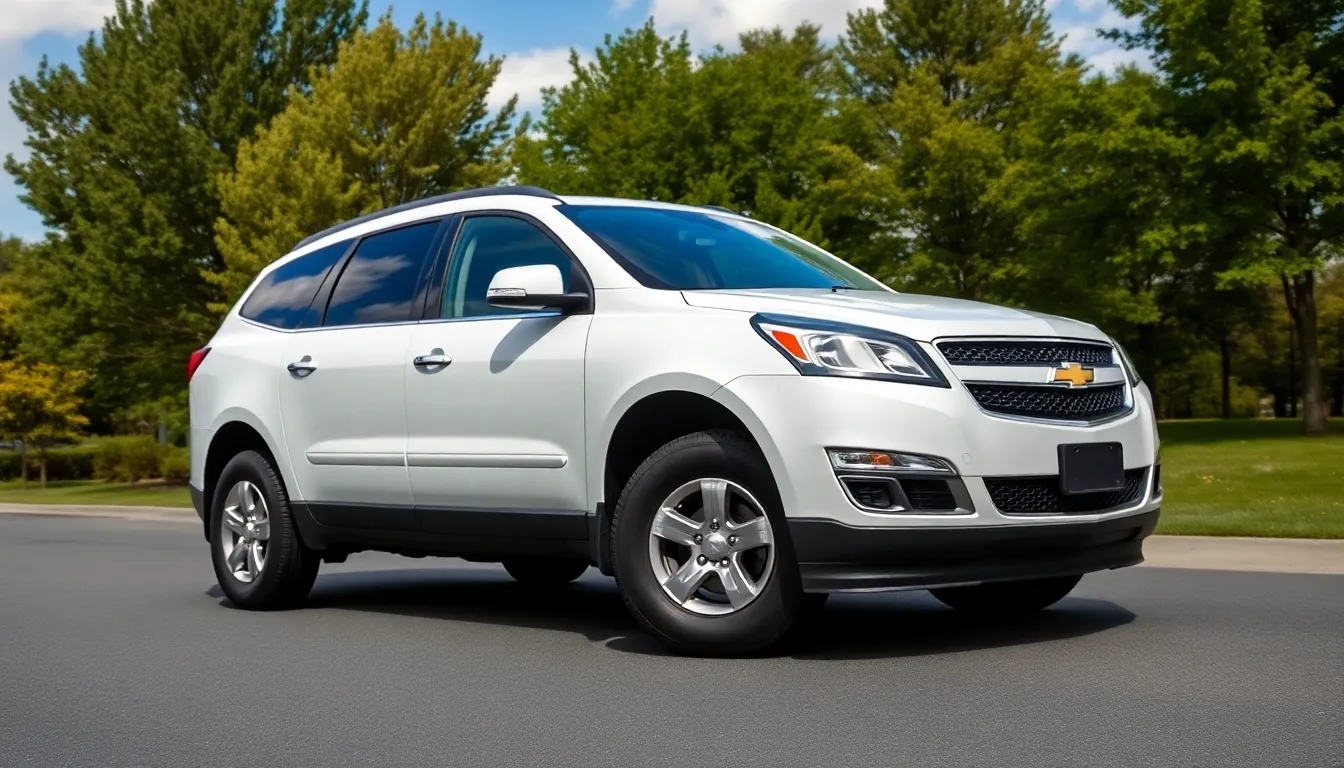
The right tire size ensures your 2012 Chevy Traverse performs as designed and keeps you safe on the road. Using manufacturer-recommended sizes maintains the vehicle’s engineering specifications and prevents potential issues with vehicle systems.
Performance Considerations
Proper tire sizing directly impacts your Traverse’s performance characteristics in multiple ways. The factory-recommended sizes (245/70R17, 255/65R18, or 255/55R20 depending on trim) are specifically engineered to work with your vehicle’s powertrain and suspension geometry. Running the correct size maintains optimal fuel efficiency by preserving the intended tire rotation speed and engine load. Your speedometer accuracy depends on the tire’s overall diameter, with incorrect sizes causing inaccurate readings that can affect navigation systems and fuel consumption calculations. The Traverse’s acceleration and braking capabilities remain consistent only when using the appropriate tire dimensions that provide the correct contact patch with the road surface.
Safety and Handling Impact
Your Traverse’s safety systems rely on correctly sized tires to function properly. The ABS and traction control systems are calibrated for exact tire dimensions, and deviations can compromise their effectiveness during emergency situations. Properly sized tires distribute vehicle weight as designed, maintaining stability during cornering and sudden maneuvers. The 245/70R17 tires on the LS trim offer balanced handling characteristics, while the 255/65R18 and 255/55R20 sizes on higher trims provide enhanced responsiveness appropriate for those models. Tire grip on wet or slippery roads depends significantly on maintaining the correct tire width and contact patch with the road surface. Emergency stopping distances can increase with improperly sized tires due to changes in friction and contact area, potentially creating dangerous situations when quick reactions are needed.
Purchasing Guide: Finding the Right Tires for Your 2012 Traverse

When to Replace Your Tires
Knowing when to replace your 2012 Chevy Traverse tires is crucial for maintaining safety and performance. Tires with tread depth below 2/32 of an inch need immediate replacement. Check for uneven wear patterns, which often indicate alignment issues or improper inflation. Cracks, bulges, or visible damage on sidewalls signal structural problems requiring prompt attention. Most tires last between 30,000-50,000 miles depending on driving habits and road conditions.
Where to Buy Replacement Tires
Multiple retailers offer quality replacement tires for your 2012 Traverse. Local tire shops provide personalized service and often include installation in their pricing. National tire chains feature competitive pricing and frequent promotions on popular brands. Online retailers typically offer the widest selection and competitive prices, though you’ll need to arrange separate installation. Dealerships stock OEM-specified tires that match factory performance characteristics, albeit at premium prices.
Cost Considerations
Tire prices for the 2012 Chevy Traverse vary based on size and quality. Entry-level tires for the LS trim with 245/70R17 sizing typically cost $110-160 per tire. Mid-range tires for the LT trim in 255/65R18 size range from $140-200 each. Premium tires for LTZ trims with 255/55R20 dimensions generally run $180-250 per tire. Installation services add $15-25 per tire, while alignment services cost an additional $80-120, recommended whenever installing new tires.
Seasonal Tire Options
Seasonal tires enhance your 2012 Traverse’s performance in exact conditions. All-season tires offer balanced performance year-round and come standard on most Traverse models. Summer tires provide superior dry and wet grip during warm months but perform poorly in cold or snowy conditions. Winter tires feature specialized rubber compounds and tread patterns that maintain flexibility and traction below 45°F, especially important for Traverse AWD models driving in snowy regions.
Balancing Performance and Comfort
Selecting tires involves balancing performance characteristics that match your driving needs. Touring tires prioritize comfort and low noise levels, ideal for family-oriented Traverse owners who primarily drive on highways. Performance tires enhance cornering and grip at the expense of ride comfort and longevity, complementing the LTZ trim’s sportier handling. All-terrain options provide moderate off-road capability for adventurous Traverse owners while maintaining acceptable on-road manners.
Maintaining Your New Tires
Proper maintenance extends the life of your 2012 Traverse tires significantly. Rotate tires every 5,000-7,000 miles to ensure even wear across all positions. Check tire pressure monthly, maintaining 35 PSI for standard 245/70R17 tires on LS models, 35-37 PSI for 255/65R18 tires on LT models, and 35-38 PSI for 255/55R20 tires on LTZ trims. Alignment checks every 15,000 miles prevent premature and uneven tire wear, particularly important after hitting potholes or curbs.
Conclusion
Finding the right tire size for your 2012 Chevy Traverse doesn’t need to be complicated. Whether you’re driving an LS with standard 245/70R17 tires or the premium LTZ with 255/55R20 options your choice impacts everything from handling to fuel economy.
Remember to check your vehicle’s door jamb sticker or current tire sidewall before making any purchase. Stick with manufacturer recommendations to maintain optimal performance and safety while exploring seasonal options that suit your driving conditions.
By properly maintaining your tires with regular rotations pressure checks and alignments you’ll extend their lifespan and ensure your Traverse delivers the comfortable reliable performance it was designed for. Your tires are your only connection to the road—choose them wisely.
Frequently Asked Questions
What are the standard tire sizes for a 2012 Chevy Traverse?
The 2012 Chevy Traverse has different tire sizes depending on trim level. The LS trim comes with 245/70R17 tires as standard. The LS and 1LT trims typically use P255/65R18 tires. The higher-end 2LT and LTZ trims come equipped with larger P255/55R20 tires. You can verify your specific tire size by checking the driver’s side door jamb sticker or the sidewall of your current tires.
Where can I find my Traverse’s tire size information?
You can find your Traverse’s tire size in two places. First, check the vehicle placard located on the driver’s side door jamb, which lists the manufacturer’s recommended tire specifications. Alternatively, look at the sidewall of your current tires where the size is printed in the standard format (e.g., P255/65R18). This information is essential when purchasing replacement tires.
Can I upgrade my Traverse from 18-inch to 20-inch tires?
Yes, you can upgrade from 18-inch to 20-inch tires if your Traverse originally came with 18-inch wheels. This upgrade requires purchasing new 20-inch wheels and the corresponding P255/55R20 tires. Many owners make this change for improved aesthetics and handling. However, remember that larger wheels may result in a firmer ride and potentially higher costs for both wheels and tires.
How do I read the tire size markings on my Traverse?
Tire size markings follow a standard format: width/aspect ratio R wheel diameter. For example, in P255/65R18: “P” indicates passenger vehicle, “255” is the width in millimeters, “65” is the aspect ratio (sidewall height as a percentage of width), “R” means radial construction, and “18” is the wheel diameter in inches. Understanding these numbers helps you select compatible replacement tires.
When should I replace the tires on my 2012 Traverse?
Replace your Traverse’s tires when the tread depth reaches 2/32 of an inch or below, which is the legal minimum. Look for the built-in tread wear indicators (bars running across the tread) becoming flush with the tread surface. Also replace tires showing significant damage like bulges, cracks, or cuts. Most tires last 40,000-60,000 miles depending on driving habits and maintenance.
What tires are best for winter driving in a Chevy Traverse?
For winter driving, dedicated winter tires in your Traverse’s factory size offer the best safety and performance. Studless winter tires like Bridgestone Blizzak or Michelin X-Ice provide excellent traction in snow and ice conditions. If you live in an area with occasional snow, high-quality all-season tires with the “Three Peak Mountain Snowflake” symbol offer a good compromise for year-round use.
How does tire size affect my Traverse’s performance?
Tire size significantly impacts your Traverse’s performance. Proper sizing ensures accurate speedometer readings, optimal fuel efficiency, and correct functioning of safety systems like ABS and traction control. The correct tire dimensions maintain the vehicle’s designed handling characteristics, stability, and emergency stopping distances. Using manufacturer-recommended sizes helps your Traverse perform as engineered and keeps you safer on the road.
How much should I expect to pay for new Traverse tires?
Expect to pay $120-$200 per tire for quality 17-inch tires, $150-$250 for 18-inch tires, and $180-$300+ for 20-inch tires. Premium brands and specialized tires (winter or performance) typically cost more. Installation, balancing, and alignment services add approximately $100-$200 to the total cost. Shopping during seasonal sales or looking for rebates can help reduce the overall expense.
What maintenance do Traverse tires require?
Proper tire maintenance includes regular rotation every 5,000-7,000 miles to ensure even wear. Check tire pressure monthly and before long trips, adjusting to the recommended PSI found on the driver’s door jamb sticker. Have wheel alignment checked annually or when you notice uneven wear or pulling to one side. These simple maintenance steps can extend tire life by thousands of miles.
Can I use all-terrain tires on my 2012 Traverse?
Yes, you can use all-terrain tires on your Traverse if you frequently drive on gravel roads or in light off-road conditions. Look for all-terrain tires in your vehicle’s factory size that specify they’re designed for SUVs/crossovers. Brands like Goodyear Wrangler or BFGoodrich All-Terrain T/A KO2 offer good options that balance off-road capability with on-road comfort suitable for a family crossover.