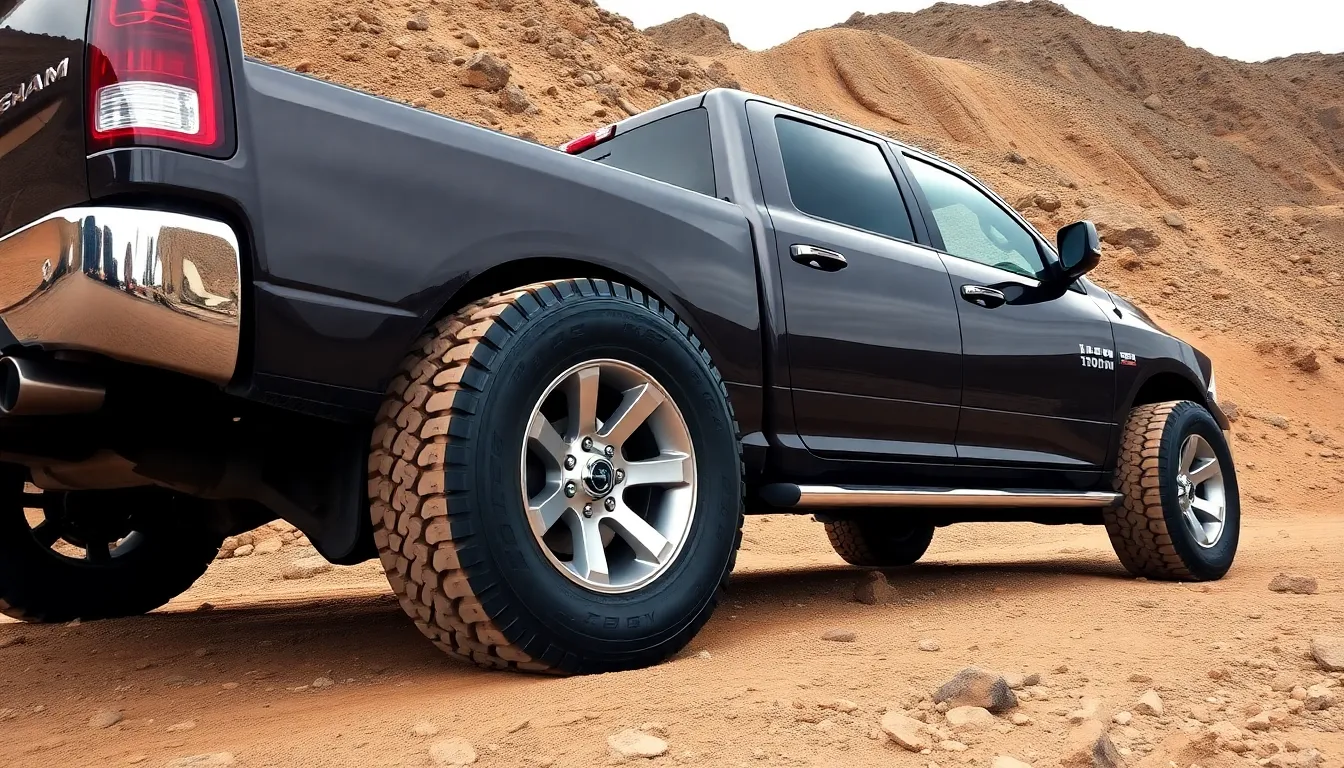
Looking for the right tire size for your 2014 Ram 1500? Finding the perfect fit can dramatically improve your truck’s performance, handling, and overall appearance.
Your Ram 1500 deserves tires that complement its powerful capabilities. Whether you’re sticking with factory specifications or considering an upgrade for better off-road performance, understanding the correct tire dimensions is crucial. The 2014 Ram 1500 typically comes with tire sizes ranging from P265/70R17 to P275/60R20, depending on the trim level and package options. We’ll explore all your options to help you make the best choice for your driving needs.
Understanding Tire Sizes for the 2014 Ram 1500
Tire size specifications on a 2014 Ram 1500 follow a standardized format that contains crucial information about the tire’s dimensions and construction. The typical format appears as P275/60R20, with each segment representing exact measurements and characteristics.
The first letter indicates the tire type – “P” stands for passenger vehicle, though many Ram 1500s use “LT” (Light Truck) tires for enhanced durability and load capacity. Following this designation, the three-digit number (275 in our example) represents the tire width in millimeters measured from sidewall to sidewall.
The two-digit number after the slash (60) defines the aspect ratio, expressing the tire’s height as a percentage of its width. Lower aspect ratios like 55 or 60 provide better handling, while higher numbers offer a smoother ride.
“R” identifies the construction type as Radial, the most common construction method for modern tires. The final number (20) indicates the wheel diameter in inches, which must match your truck’s rim size exactly.
Additional markings often include load index and speed rating symbols that specify the maximum weight capacity and speed capabilities. For instance, a tire marked 109T can support approximately 2,271 pounds at speeds up to 118 mph.
During a recent off-road trip, Liam Kohn noticed how his Ram’s factory P265/70R17 tires struggled in muddy conditions. After upgrading to LT285/70R17 tires with more aggressive tread patterns, he experienced dramatically improved traction and ground clearance without important fuel economy penalties.
Factory Tire Specifications for the 2014 Ram 1500
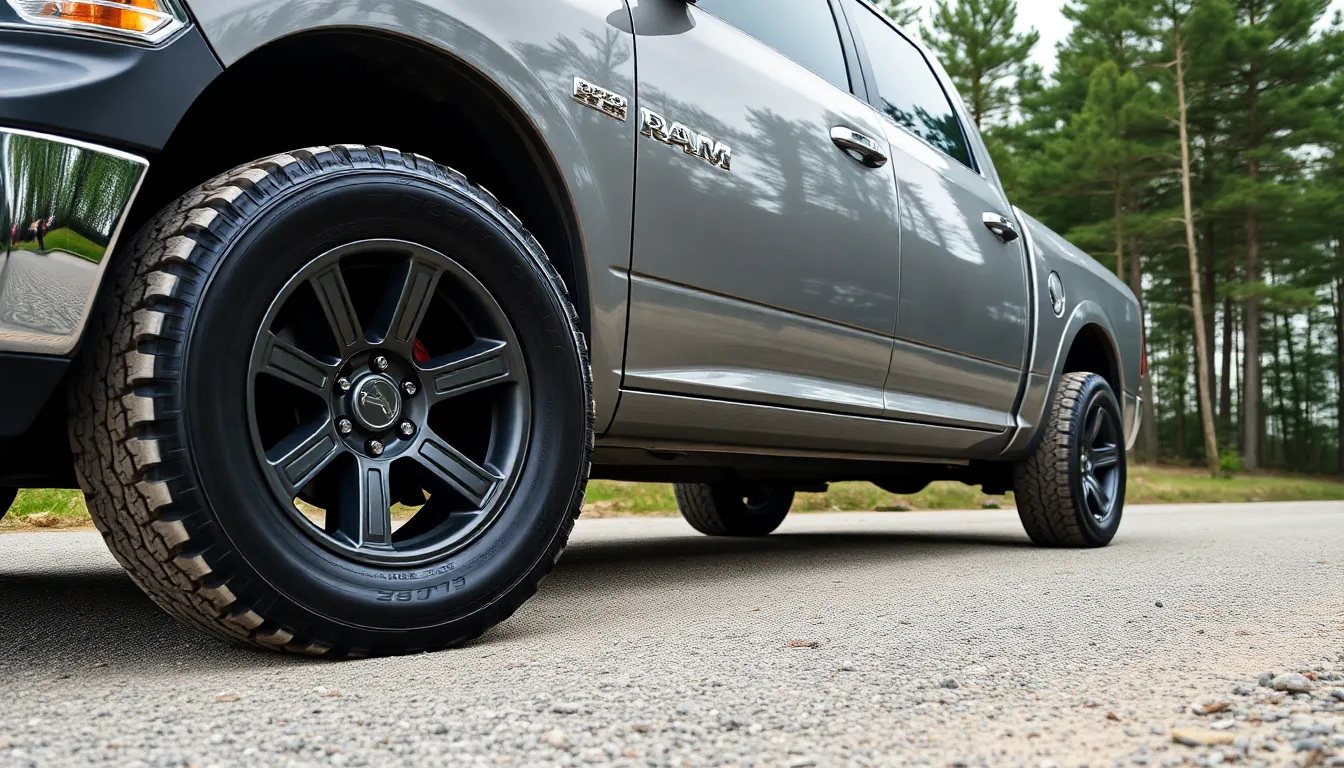
The 2014 Ram 1500 came equipped with several factory tire options that varied based on trim level and intended use. These manufacturer-specified sizes were carefully selected to balance performance, comfort, and capability for different driving conditions.
Base Model Tire Dimensions
Base models of the 2014 Ram 1500 featured 265/70R17 tires mounted on 17-inch rims as the standard configuration. This tire size was common across multiple trim levels including the Tradesman, SLT, Outdoorsman, and Special Service models. Four-wheel drive (4WD) versions also typically used the same 265/70R17 tire size, offering approximately 31.6 inches of total diameter. These tires provided a good balance of on-road comfort and light off-road capability without sacrificing fuel economy.
Trim-Exact Tire Sizes
Higher-end trims offered larger wheel and tire combinations for enhanced appearance and performance. The Laramie, Big Horn, Express, Laramie Limited, Laramie Longhorn, and Lone Star trims came standard with 275/60R20 tires mounted on 20-inch wheels. Sport trim models offered even more options, including either the 275/60R20 size or larger 285/45R22 tires specifically for Regular Cab configurations. The Outdoorsman trim was uniquely versatile, available with either 265/70R17 tires on 17-inch wheels or 275/60R20 tires on 20-inch wheels depending on the package selected.
Liam Kohn, who previously owned a 2014 Ram 1500 Big Horn, noted that the factory 275/60R20 tires offered decent all-around performance but lacked the aggressive tread pattern he needed for frequent trips to his hunting property. “The stock tires handled well on highways and light gravel, but I noticed a important improvement in traction after upgrading to more aggressive tires with a similar size,” Kohn mentioned.
| Trim Level | Standard Tire Size | Wheel Size |
|---|---|---|
| Tradesman/SLT | 265/70R17 | 17-inch |
| Laramie/Big Horn | 275/60R20 | 20-inch |
| Sport Regular Cab | 285/45R22 | 22-inch |
| Outdoorsman | 265/70R17 or 275/60R20 | 17 or 20-inch |
Upgrading Your 2014 Ram 1500 Tires
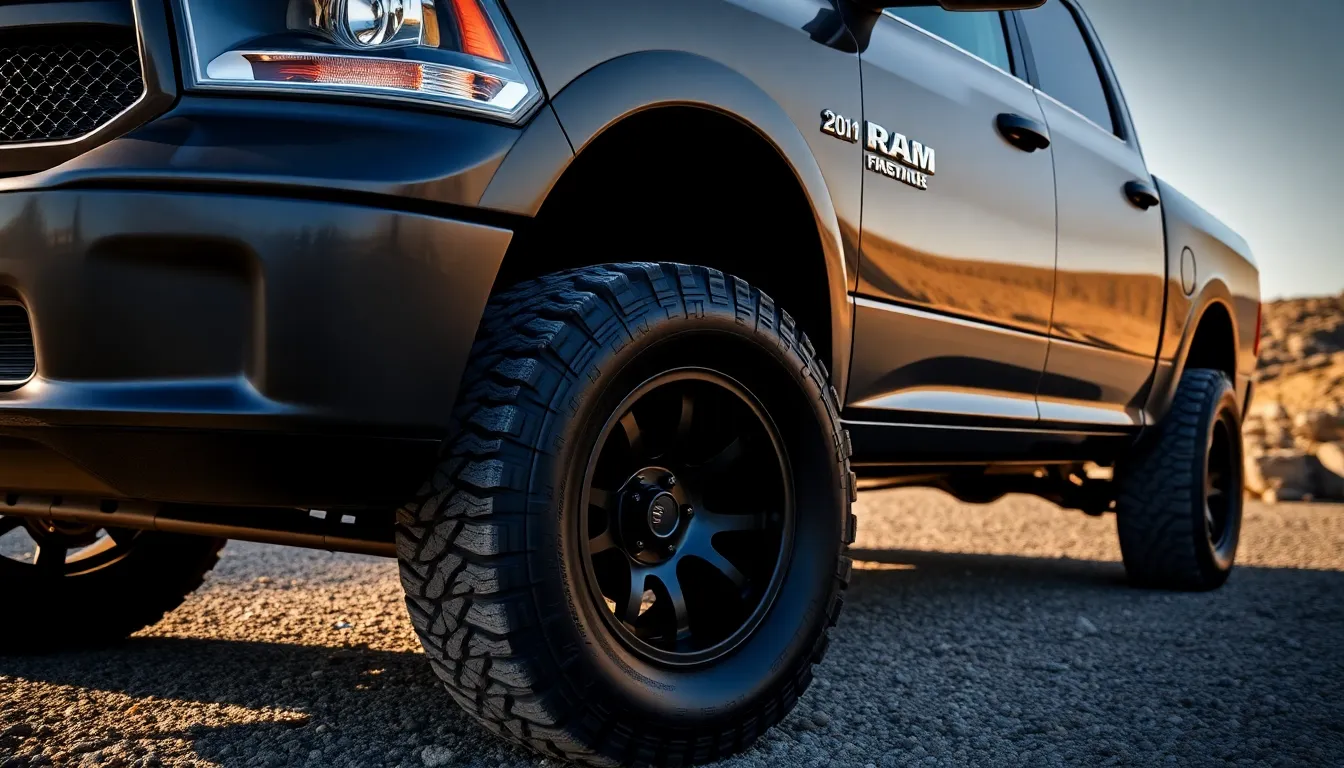
Upgrading your 2014 Ram 1500 tires can dramatically improve performance, aesthetics, and capability. Many owners choose to go beyond factory specifications for enhanced off-road prowess or a more aggressive stance.
Maximum Tire Size Without Modifications
The 2014 Ram 1500 accommodates tires up to 33 inches in diameter without requiring any suspension or body modifications. This size limit typically translates to 275/60R20 tires, which provide adequate clearance in the wheel wells and don’t interfere with steering or suspension components. Going beyond this diameter often creates clearance issues, particularly during full suspension articulation or when turning sharply. Liam Kohn discovered this limitation firsthand when he initially attempted to fit oversized tires on his 2014 Ram 1500 Big Horn, noting that “anything larger than 33 inches caused rubbing against the fender wells during tight turns.”
Popular Aftermarket Tire Options
Aftermarket tire upgrades for the 2014 Ram 1500 typically focus on sizes that mirror or slightly exceed the larger OEM options. The 275/60R20 size remains popular among owners seeking a balanced upgrade without requiring additional modifications. For those with 22-inch wheels, the 285/45R22 or 305/45R22 sizes offer wider, more aggressive profiles while maintaining acceptable clearance parameters. All-terrain and mud-terrain tires from major manufacturers provide excellent traction benefits over standard highway tires while retaining reasonable on-road manners. Owners frequently report improved performance in snow, mud, and off-road conditions after upgrading to these more specialized tires. The added tread depth and sidewall strength of aftermarket options also enhance durability for owners who regularly tackle challenging terrain or haul heavy loads.
Benefits of Different Tire Sizes for Your Ram 1500
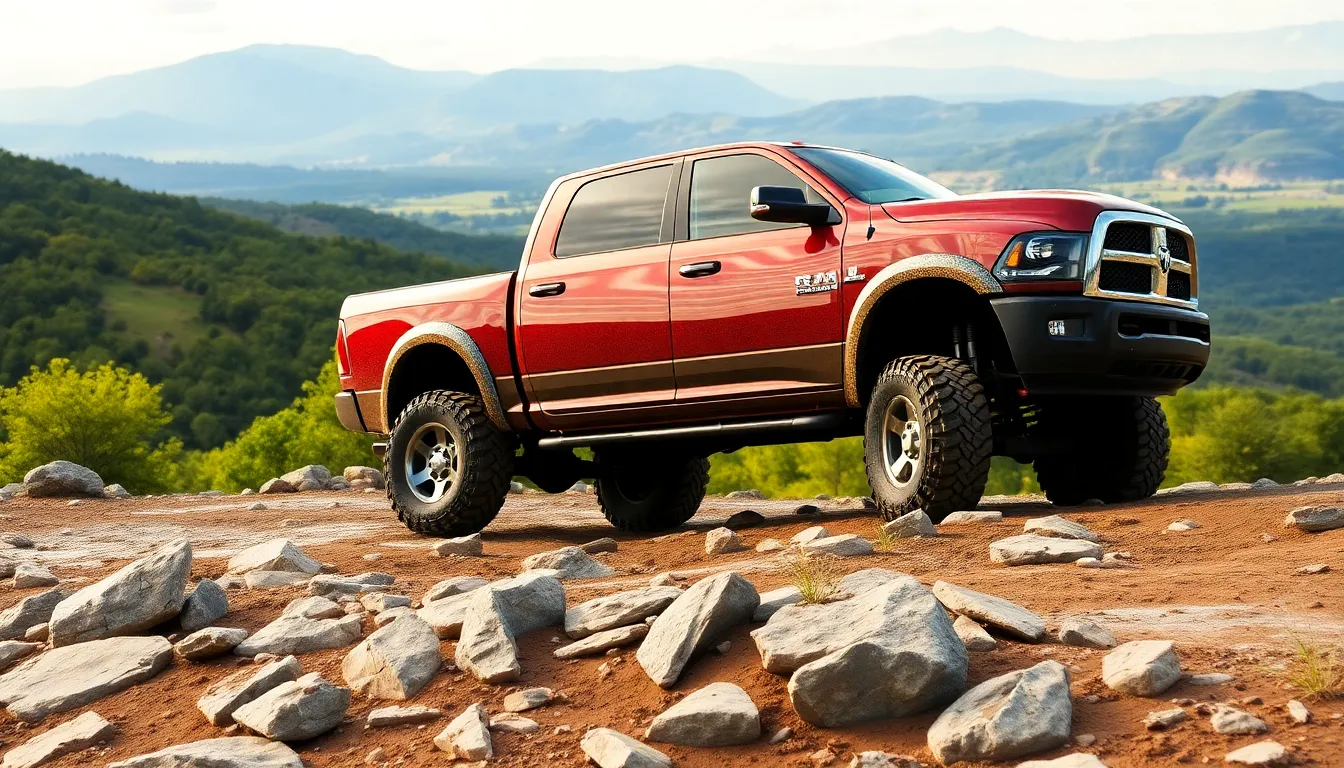
Selecting the right tire size for your 2014 Ram 1500 affects everything from performance to appearance. Different tire dimensions create distinct advantages depending on your driving needs and preferences.
Performance Considerations
Larger tires on your Ram 1500 change its driving dynamics in several ways. The increased diameter typically reduces acceleration due to the heavier rotational mass and altered axle drive ratios. Your truck’s braking performance might decrease slightly with oversized tires as they require more force to stop their momentum. Highway fuel economy can actually improve with bigger tires since they reduce engine RPMs at cruising speeds, though this benefit is often offset by increased rolling resistance and weight.
Ground clearance improves significantly with larger diameter tires, as experienced by Liam Kohn who upgraded from factory tires to LT285/70R17 tires on his 2014 Ram 1500 Big Horn. He noticed “dramatically improved traction in muddy conditions and better clearance over rocks during weekend trail rides.” Safety systems deserve special attention when changing tire sizes – ABS, electronic stability control, and traction control may require recalibration to function properly with non-stock tire dimensions.
Modest increases in tire size maintain most of your truck’s stock handling characteristics while providing better obstacle clearance. The stock 265/70R17 can be upgraded to 275/65R18 without major performance compromises. For those who frequently tow or haul heavy loads, staying closer to factory specifications ensures optimal weight ratings and brake performance.
Aesthetic Impact
Larger tires transform your Ram 1500’s stance and presence on and off the road. The truck gains a more commanding appearance with taller, wider tires that fill wheel wells more completely. Many owners pair tire upgrades with leveling kits or small lifts to create a balanced, aggressive look without excessive modification.
Tire sidewall design impacts your truck’s visual character as much as the size itself. All-terrain tires feature bold tread patterns and aggressive sidewalls that enhance the rugged appearance of your Ram. Highway tires provide a cleaner, more streamlined look suited for a street-focused truck. Wheel and tire combinations can dramatically alter your truck’s profile – larger diameter wheels with lower profile tires create a modern, sporty appearance while smaller wheels with taller sidewalls emphasize off-road capability.
Visual modifications tend to work best when they’re proportional. Your Ram 1500 can comfortably fit tires up to 33 inches in diameter without modifications, giving plenty of room for aesthetic enhancement without compromising function. The factory 275/60R20 size represents a popular balanced upgrade that improves appearance without requiring important vehicle modifications or performance sacrifices.
Common Issues When Changing Tire Sizes
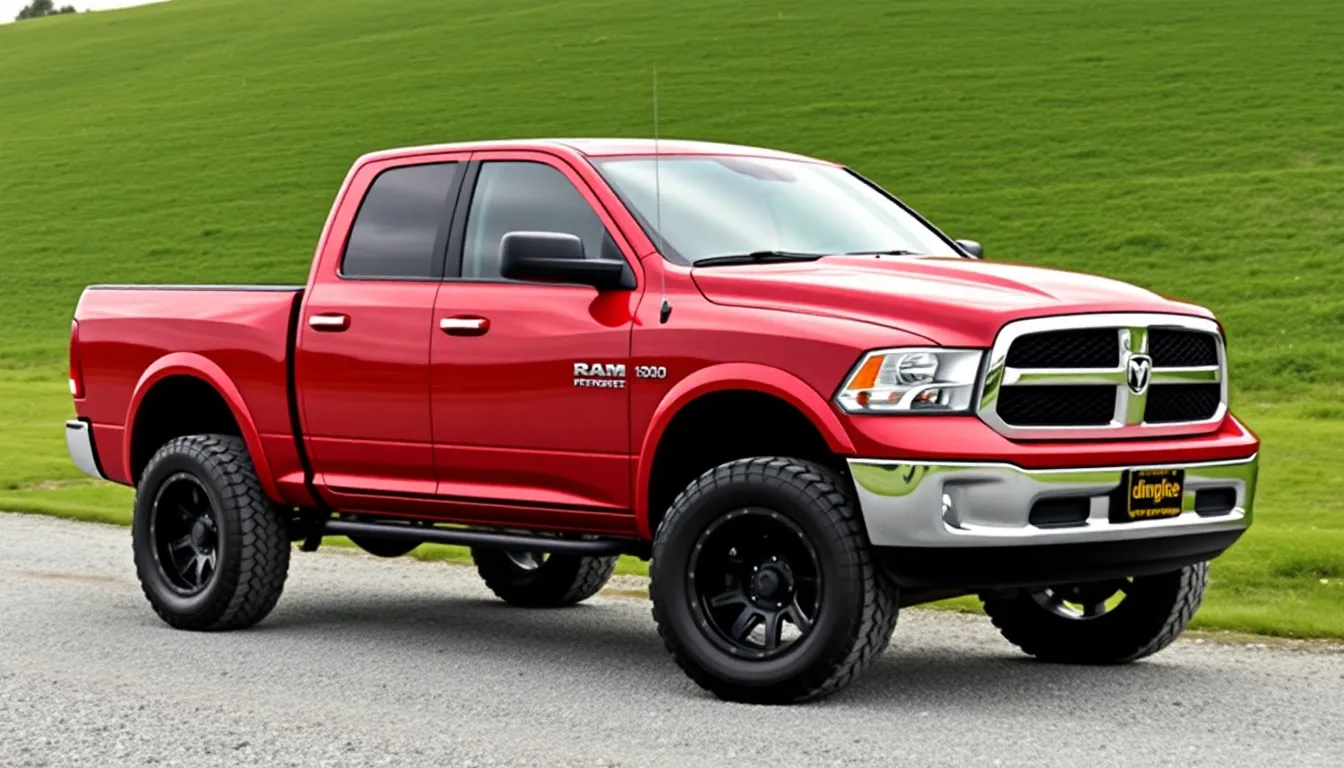
Changing tire sizes on your 2014 RAM 1500 impacts several performance aspects beyond just appearance. These modifications require careful consideration to maintain your truck’s functionality and safety features.
Speedometer Calibration
Tire size alterations directly affect your speedometer’s accuracy on the RAM 1500. Your truck’s speedometer is calibrated specifically for the original tire circumference, so installing larger tires causes it to under-report your actual speed, while smaller tires result in over-reporting. This discrepancy occurs because different tire sizes change the overall rolling circumference, altering how frequently each tire completes a full rotation per mile traveled. For example, upgrading from factory 265/70R17 tires to larger 285/45R22 tires without recalibration might show you’re traveling 60 mph when you’re actually moving at 65 mph. Electronic speedometer adjustments or professional recalibration are essential to maintain accurate readings and avoid potential speeding tickets or safety risks.
Fuel Economy Effects
Your RAM 1500’s fuel efficiency changes noticeably with different tire sizes. Larger or heavier tires increase rolling resistance and overall vehicle weight, typically reducing gas mileage by 1-2 mpg. The truck’s factory fuel economy is optimized for stock tire sizes like the 275/60R20 found on Sport trims. Liam Kohn noted that after upgrading to more aggressive LT-rated tires on his 2014 RAM 1500 Big Horn, he experienced approximately a 1.5 mpg decrease in fuel economy, though he considered this an acceptable trade-off for the improved off-road performance. Conversely, some owners report that switching to smaller, lighter tires improves fuel efficiency but compromises the truck’s ground clearance and towing capabilities. Your driving habits and typical terrain also factor into how significantly tire changes affect fuel consumption.
Recommended Tire Brands for the 2014 Ram 1500
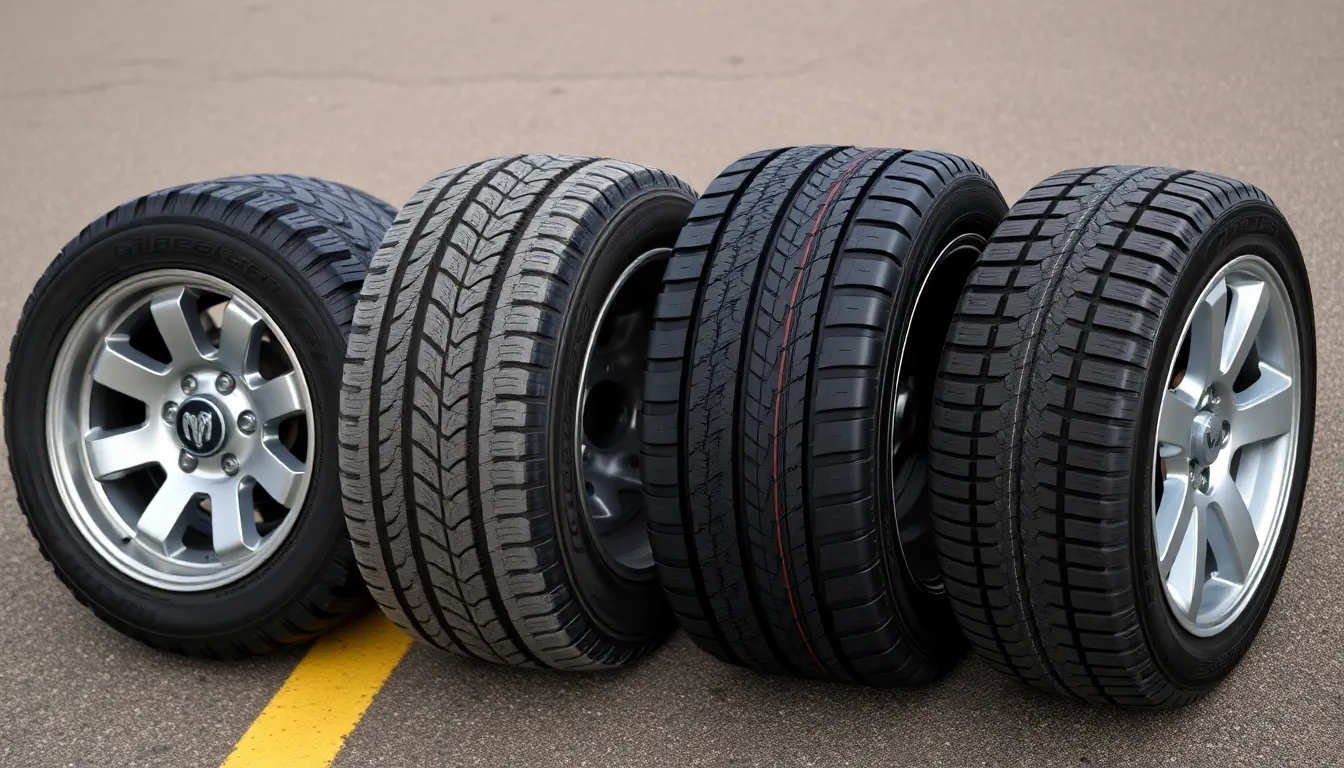
Several high-quality tire manufacturers offer excellent options for the 2014 Ram 1500. Goodyear stands out with their Wrangler UltraTerrain A/T tires, which provide an impressive balance between rugged off-road capability and smooth highway performance. Michelin tires deliver exceptional longevity and fuel efficiency, making them ideal for Ram owners who primarily drive on paved roads.
Bridgestone produces durable options that handle well in various weather conditions, particularly important for Ram 1500 owners who experience seasonal changes. Pirelli offers performance-oriented tires that enhance handling characteristics while maintaining the comfort expected from a full-size pickup.
When selecting between these brands, consider your typical driving conditions:
- Goodyear: Best for drivers who split time between highways and trails
- Michelin: Optimal for high-mileage highway drivers seeking fuel efficiency
- Bridgestone: Excellent for all-weather reliability and balanced performance
- Pirelli: Ideal for those prioritizing on-road handling and responsiveness
The 2014 Ram 1500 accommodates several tire sizes across its trim levels. Factory tire sizes include 265/70R17 (commonly found on HFE, Laramie, Outdoorsman, SLT, Special Service, and Tradesman trims), 275/60R20 (typical for Big Horn, Express, Laramie, Laramie Limited, Laramie Longhorn, Lone Star, Outdoorsman, and Sport trims), and 285/45R22 (specifically on the Sport Regular Cab).
Rim diameters range from 17 inches to 22 inches depending on your exact trim and optional packages. LT265/70R17 tires appear on some Tradesman and other trims, offering enhanced load-carrying capacity compared to standard P-metric alternatives.
Your driving needs eventually determine the most appropriate tire brand. Off-road enthusiasts benefit from all-terrain options with aggressive tread patterns, while highway drivers appreciate all-season tires that provide quieter operation and better fuel economy. The factory tire specifications offer a solid baseline, but many Ram owners choose to upgrade their wheels and tires for improved performance or aesthetics.
Conclusion
Choosing the right tire size for your 2014 Ram 1500 balances performance needs with personal preference. Whether you stick with factory sizes like 265/70R17 or 275/60R20 or upgrade to larger options up to 33 inches you’ll experience different benefits and trade-offs.
Remember that tire upgrades affect more than just appearance. They impact handling acceleration fuel economy and even your speedometer accuracy. For the best results consider recalibrating your truck’s systems after important size changes.
Quality matters too. Brands like Goodyear Michelin Bridgestone and Pirelli each offer specialized options to match your driving style. By understanding tire specifications and your exact needs you’ll maximize your Ram 1500’s capabilities and enjoy a more customized driving experience.
Frequently Asked Questions
What are the standard tire sizes for a 2014 Ram 1500?
The standard tire sizes for a 2014 Ram 1500 range from P265/70R17 to P275/60R20, depending on the trim level. Base models typically come with 265/70R17 tires, while higher-end trims like the Laramie and Big Horn feature larger 275/60R20 tires. The Outdoorsman trim offered either size depending on the package selected.
What do the tire size numbers like P275/60R20 mean?
The tire size format breaks down as follows: “P” indicates passenger vehicle tires (many Ram 1500s use “LT” for Light Truck), “275” is the width in millimeters, “60” is the aspect ratio (sidewall height as a percentage of width), “R” stands for radial construction, and “20” is the wheel diameter in inches.
How large can I go with tires on a 2014 Ram 1500 without modifications?
The 2014 Ram 1500 can accommodate tires up to 33 inches in diameter without requiring modifications. Popular upgrade choices include 275/60R20 for a balanced improvement. If you have 22-inch wheels, sizes like 285/45R22 or 305/45R22 offer a more aggressive profile while maintaining fitment within the stock wheel wells.
Will changing tire size affect my speedometer accuracy?
Yes, changing tire size will affect speedometer accuracy because the factory calibration is based on the original tire circumference. For example, upgrading from 265/70R17 to larger 285/45R22 tires without recalibration will cause the speedometer to under-report your actual speed. Consider getting your speedometer recalibrated after a tire size change.
How does tire size affect fuel economy?
Larger or heavier tires typically reduce fuel efficiency due to increased rolling resistance and weight. Many Ram 1500 owners report a decrease in gas mileage after upgrading to larger tires. Conversely, smaller tires may improve fuel economy but can compromise ground clearance and towing capabilities.
What are the best tire brands for a 2014 Ram 1500?
Top recommended brands include Goodyear, Michelin, Bridgestone, and Pirelli. Goodyear Wrangler UltraTerrain A/T tires offer balanced off-road and highway performance. Michelin tires excel in longevity and fuel efficiency. Bridgestone provides durable options for various weather conditions, while Pirelli focuses on performance-oriented tires. Choose based on your typical driving conditions.
Can I improve off-road performance with different tires?
Absolutely. Upgrading to all-terrain or mud-terrain tires can dramatically improve off-road performance. LT-rated tires offer better durability for challenging terrains and heavy loads. As demonstrated by Liam Kohn’s experience, upgrading to LT285/70R17 tires significantly improved traction and ground clearance during off-road conditions.
How do larger tires affect driving performance?
Larger tires can affect acceleration, braking distance, and overall handling. They typically result in slightly reduced acceleration due to increased rotational mass and may require longer stopping distances. However, they can provide better stability at highway speeds and improved ground clearance for off-road driving.